Seven Years of Future Green: What I’ve Learnt About Creating Change

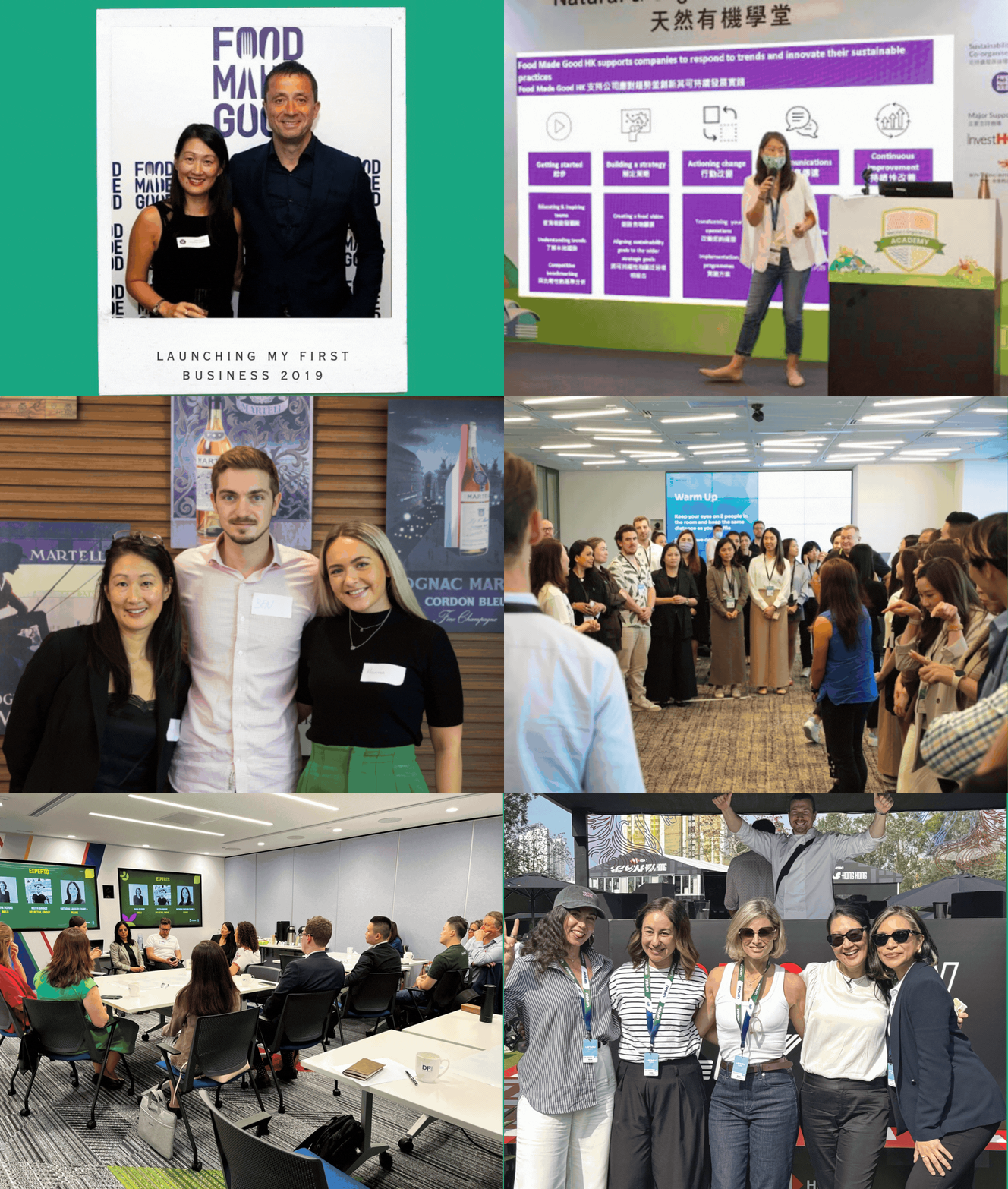
A look back at Future Green over the years.
On 1 September, Future Green turns seven.
Seven years. It feels both incredibly long and remarkably short.
When I started this journey in 2019, I certainly didn’t have a seven-year master plan. What I had was a growing conviction that our food system could, and needed to work differently.
The question that initially pulled me into this world was surprisingly simple: What’s really in our food?
The more I learnt about how our food is grown, produced, sourced and served, the more questions I had. Questions about antibiotics and farming. Animal welfare. Where ingredients came from. How workers were treated. Food waste. Climate change. Biodiversity. Health.
And, perhaps most importantly: what could businesses actually do about all of it?
That curiosity eventually became a mission.
On 1 September 2019, I officially registered the business that began as Food Made Good Hong Kong. At the time, I couldn’t have imagined where that decision would take me — or what the business would become seven years later.
But that was the beginning.
And, as they say, the rest is history.
From Food Made Good HK to Future Green
We began as Food Made Good Hong Kong, working closely with the hospitality industry to put food sustainability on the agenda and help businesses understand what better practice could look like.
Those early years taught me something that has shaped almost everything we’ve done since: Knowledge alone doesn’t create change.
You can give someone the science, a framework, a 100-page sustainability report or a list of recommendations. But if people aren’t aligned, confident and equipped to act, very little changes.
There were also a lot of memorable firsts.
I still remember the excitement of seeing our work in the news for the first time. Something that had started as an idea was suddenly being talked about beyond our immediate network.
Then came another big first: the Food Made Good HK Awards.
In 2020, we held the first Awards in Hong Kong, creating a platform to recognise the restaurants, chefs and businesses pushing food sustainability forward. The Awards went on to attract significant media attention and bring together sponsors, partners and changemakers from across the industry.
And, in true start-up fashion, our first Awards didn’t exactly go according to plan. With rising COVID cases, we had to move the ceremony online with just 48 hours’ notice.
We adapted. We made it happen. And we learnt a lot along the way.

Food Made Good Awards
Getting our first sponsor was another milestone. Someone else believed enough in what we were trying to build to invest in making it happen. For a young purpose-led business, that meant a lot.
Then came our first regional project, delivering sustainability training for Pernod Ricard across Asia. It was one of those moments when I realised that what we’d started in Hong Kong had the potential to travel much further.
Each first felt like a milestone at the time. Looking back, they were the building blocks of what Future Green would eventually become.
Becoming Future Green
As the years went on, our work evolved.
We were no longer only working with restaurants. We were working with schools, retailers, hospitality groups, procurement teams, corporates and global brands.
Our projects were becoming bigger, more strategic and increasingly international.
So in 2023, Food Made Good Hong Kong became Future Green, a name that better reflected both where we’d come from and where we wanted to go.
Our purpose became clearer: redefining food for a resilient future.
Today, Future Green is a purpose-led, B Corp-certified and 100% woman-owned consultancy, helping organisations turn sustainability from a tick-box exercise into practical action and long-term value.

Future Green’s Year-End Sustainability Social
Seven Years of Turning Ideas Into Action
Over the years, we’ve experimented a lot.
We’ve run strategy workshops, sustainability training, Carbon Literacy programmes, food sustainability courses, menu carbon-labelling projects, events, community meetups, supplier engagement sessions and countless workshops.
We’ve brought people together to talk about everything from food waste and responsible seafood to biodiversity, animal welfare, fair labour, nutrition, procurement and climate change.
We’ve worked with organisations across different sectors and markets, helping teams move from understanding sustainability challenges to deciding what they can actually do about them.
Today, we’ve delivered 10,000+ hours of workshops worldwide, trained professionals in Carbon Literacy and built a growing community of people committed to creating a better food system.
But the numbers aren’t really what I remember.
I remember the moments when someone suddenly sees a problem differently.
The team that walks into a workshop with competing priorities and leaves agreeing on what needs to happen next.
The person who arrives thinking sustainability isn’t part of their job and realises they have far more influence than they thought.
The conversations after a meetup when two people realise they could work together.
Those moments are why we do this.

Strategy Sprint Workshop with Compass Group Hong Kong
One of My Biggest Lessons: Facilitation Is an Operating System for Change
One of the biggest shifts in my thinking over these seven years has been understanding just how important facilitation is to sustainability.
We often approach sustainability as a technical challenge.
And, of course, technical expertise matters.
But many of the barriers I see inside organisations aren’t caused by a lack of information. They’re caused by competing priorities, unclear ownership, siloed teams, difficult decisions and people struggling to agree on what should happen next.
That’s why facilitation has become such an important part of Future Green’s work.
A good workshop isn’t about filling a room with Post-it notes.
It’s about creating the conditions for people to think differently, hear different perspectives, make decisions and move forward together.
I’ve come to believe that facilitation is the operating system for change.
Because sustainability doesn’t happen when one sustainability manager knows all the answers.
It happens when people across an organisation are able to act together.
And this year, we’re taking that philosophy even further with our 5-day Facilitation Practice Retreat in Sintra, Portugal.
Rather than another course or certification, it’s about something I believe facilitators don’t get enough of: practice. Five immersive days to facilitate, experiment, receive feedback, learn from others and build the confidence that only comes from doing.

Completed my Full Stack Facilitator Training by Aj&Smart in Palo Alto
From Supporting Organisations to Supporting Changemakers
We’ve changed as a business too.
Consulting remains at the heart of Future Green. Today, around 70% of our business comes from consulting, helping organisations turn sustainability ambitions into strategy, training, facilitation and practical action.
But another part of our work has been growing.
Over seven years of building Future Green, I’ve learnt a huge amount about what it actually takes to turn sustainability expertise into a viable, purpose-led business, not just the sustainability knowledge, but finding your niche, designing offers, facilitating clients, building systems and creating something commercially sustainable.
That’s one of the reasons we created the Green Entrepreneur Method (GEM) Programme, our coaching programme supporting sustainability professionals and aspiring consultants who want to transition into running their own purpose-led businesses.
For me, this feels like a natural evolution of Future Green.
We help organisations create change. And increasingly, we’re helping develop the consultants, facilitators and entrepreneurs who can lead it.
Community Has Always Been Part of the Answer
Another lesson from the last seven years is that none of this work happens alone.
Future Green has always been community-driven.
Our meetups, courses, workshops, events and community have connected people from across the food system to share what they’re trying, what isn’t working and what they’re learning.
Some of my favourite moments have come from putting people with completely different perspectives into the same room and seeing what happens.
Chefs talking to sustainability specialists.
Procurement teams talking to suppliers.
Corporates learning from start-ups.
Educators exchanging ideas with food businesses.
People discovering that somebody else has already wrestled with the problem they’re trying to solve.
Sustainability can sometimes feel overwhelming when you’re tackling it alone.
Community reminds us that we don’t have to.
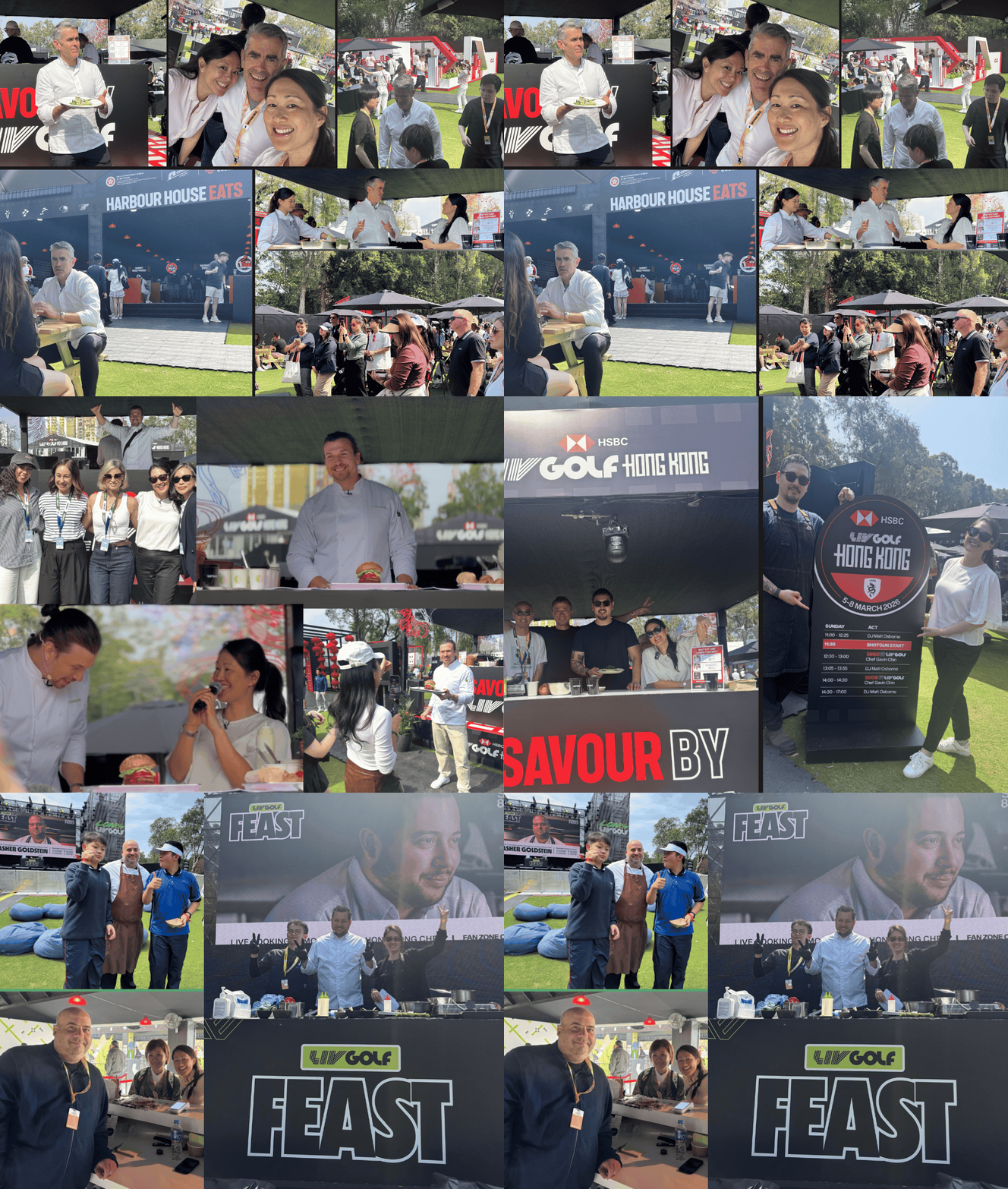
Future Green at 2025 and 2026 LIV Golf Hong Kong events
We’ve Changed Too
Seven years of running a purpose-led business has also meant seven years of learning, experimenting and occasionally getting things wrong.
We’ve launched things that worked brilliantly.
We’ve launched things that didn’t.
We’ve changed our services, sharpened our methodologies, built new tools, redesigned courses and questioned our own assumptions.
And I think that’s healthy.
One of our values at Future Green is being progressive, always evolving, never standing still.
If we’re asking businesses to adapt to a changing food system, we have to be willing to do the same.
Perhaps that’s one of the biggest things seven years has taught me: you don’t need to know exactly where something will lead before you begin.
Our first client led to another.
Our first sponsor helped an idea become a reality.
Our first Awards created a community.
Our first regional project showed us we could think beyond Hong Kong.
And a business registered on 1 September 2019 grew into something I couldn’t have fully imagined at the time.

Future Green UnConference 3.0
So, What Does the Next Seven Years Look Like?
I don’t think anyone can predict exactly what our food system will look like seven years from now.
Climate pressures will intensify. Supply chains will change. Technology will change how we produce, procure and understand food. Businesses will face greater expectations around transparency, resilience and impact.
But one thing feels very clear to me.
We don’t need more sustainability strategies sitting on shelves.
We need more people capable of turning ambition into action.
That’s where I want Future Green to keep focusing our energy: helping people understand complex sustainability challenges, bringing the right people together, making better decisions and giving teams the confidence and practical tools to move forward.
And increasingly, I want us to help the people behind that change too — the facilitators, consultants and entrepreneurs building careers and businesses around creating a better future.
Because food sustainability isn’t ultimately about having the perfect policy.
It’s about changing what happens every day, what we grow, what we buy, what we serve, what we waste and the decisions we make along the way.

Honoured to be named one of Harper’s Bazaar’s Visionary Women
Thank You 💚
Seven years of Future Green wouldn’t have happened without an extraordinary community around us.
To every client who trusted us with a challenge.
Every member who showed up and contributed.
Every trainer, facilitator, expert, partner and collaborator who shared their knowledge.
Every person who attended a workshop, challenged an idea, asked a difficult question or decided to try something differently afterwards.
And, of course, every member of the Future Green team, past and present who helped turn an idea into something much bigger than I could have built alone.
Thank you.
I’m incredibly proud of how far we’ve come, but I’m even more excited about what we haven’t done yet.
Seven years in, I’m still asking questions.
I’m still learning.
And I still believe that changing our food system is possible when we bring the right people together and give them the tools to act.
And if there’s one thing I’d tell anyone thinking about starting something of their own, it’s this: you don’t have to be 21 to start a business. You can start in your 40s, find your passion and build something meaningful from it.
There will always be naysayers. Listen to useful feedback, learn from it and use it to get better, but don’t let it stop you from going for it.
Sometimes, you just have to start.
Here’s to the next seven years, and to many more firsts. 🌱

—————————————————————
Celebrate With Us 💚
And what better way to celebrate seven years of Future Green than by bringing our community together?
Join us for our next in-person Members Meetup on 15 September, where we’ll gather over breakfast at TABLE with Chef Sandy Keung.
We’ll explore the question: Where does our seafood really come from? From traceability and responsible sourcing to building more transparent and resilient seafood supply chains, it will be a morning of practical insights, meaningful conversation and connection.
📅 15 September 2026 ⏰ 9:00–11:00 AM HKT 📍 TABLE, Hong Kong
We’d love to see you there and celebrate seven years of learning, collaboration and action together.
* For members, calendar invites have been sent! Please accept the invitation if you can make it.
We’d love to see you there.

“We have just become a member of this community and the meet-ups are very well organised and we were able to drive awareness for our initiatives. Keep it up, Futuregreen!”
Jo Soo Tang
Founder of r é n Hong Kong
“Thanks for inviting me to the Future Green Meetup! I was impressed with the high level of engagement. Good Job on creating such a community!”
Amanda Cundiff
