Bringing Food Sustainability into the Classroom: Future Green’s Lunch & Learn at Chinese International School

How can schools help students understand the connection between what we eat, our health and the planet?
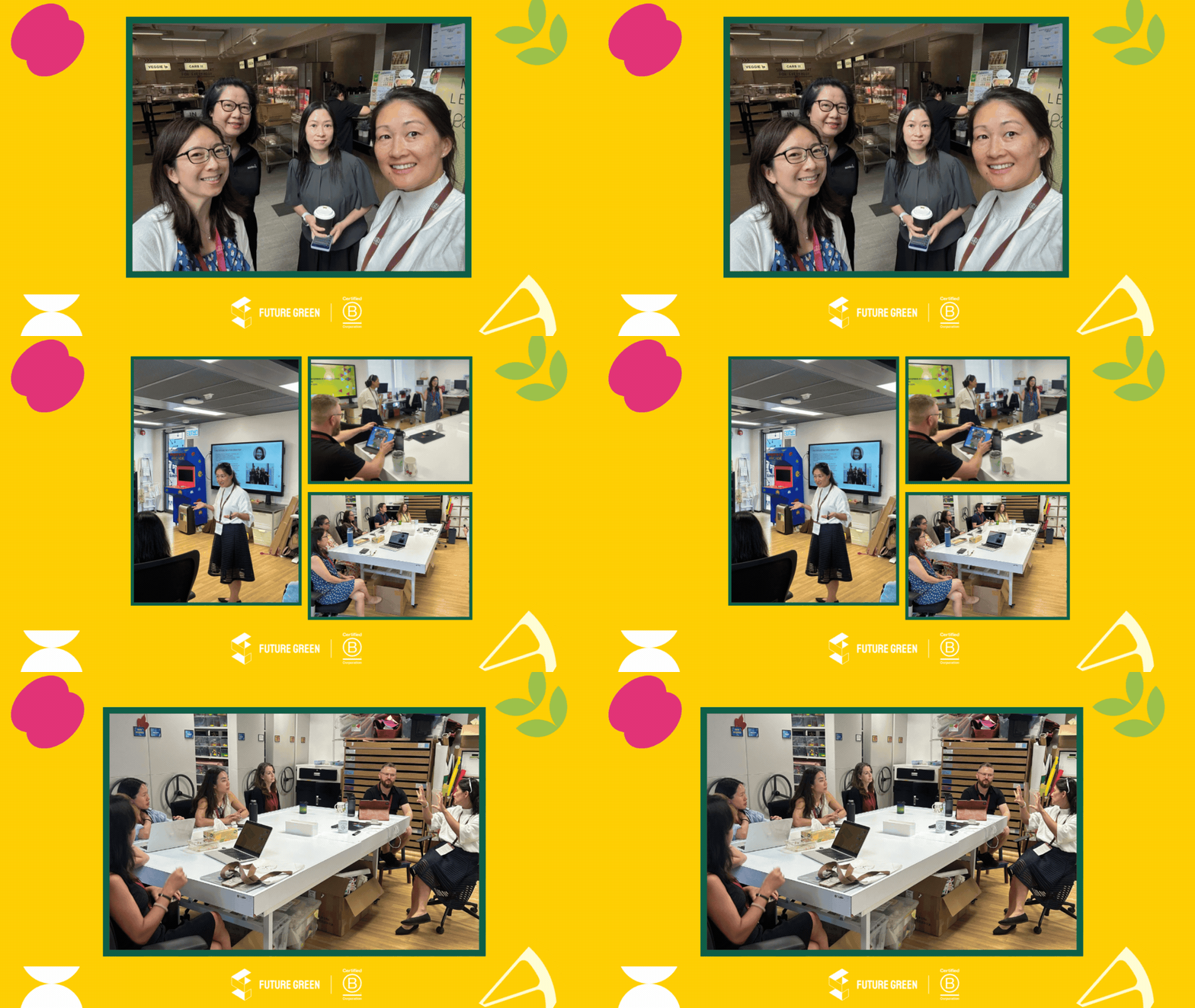
Future Green recently joined teachers at Chinese International School (CIS), a member of the Future Green community, for a Lunch & Learn exploring the carbon footprint of food and practical ways sustainability can be brought to life across the school.
Led by Heidi Spurrell, Founder and CEO of Future Green, the session gave teachers an opportunity to step away from their usual lunchtime routine, exchange ideas and explore examples of sustainability initiatives already being implemented in schools.
Understanding the carbon footprint of food
Food is something every student interacts with every day, making it a powerful starting point for sustainability education.
During the session, Heidi explored where the carbon footprint of our food comes from and why some ingredients have a much greater environmental impact than others.
One important takeaway was that how food is produced can matter much more than how far it has travelled. Around 80% of a meal’s carbon footprint can come from the agricultural production stage, challenging the common assumption that choosing local food is always the lowest-carbon option.
Teachers also explored the relationship between health and environmental impact. Foods associated with healthier diets, including vegetables, pulses, whole grains and other plant-based ingredients, also tend to have a lower environmental footprint.
This creates an important opportunity for schools:
Turning sustainability into something students can see
The conversation quickly moved from the bigger picture to a practical question: How can these ideas become meaningful learning experiences for students?
Teachers shared ways food sustainability could connect with different subjects and age groups.
In maths and finance lessons, students could compare the prices of Fairtrade and conventional products or explore the difference between food bought at a wet market and packaged alternatives.
School gardens and farms can become spaces to investigate biodiversity, soil health, intercropping and the food production system. Food waste can connect with lessons about food insecurity and community support, while drama and group activities can explore sustainability through relationships, collaboration and shared responsibility.
Familiar activities such as sustainability bingo, true-or-false games, matching challenges and dot voting can also make complex topics more accessible and engaging.
The discussion showed that food sustainability does not have to sit within one subject. It can become a thread running across the curriculum.

Learning from what other schools are doing
We also shared examples of practical initiatives schools have used to turn sustainability goals into measurable action.
At one school canteen in Dubai, a combination of simple interventions, including point-of-sale communications, clearer portion-size displays and transparent food waste bins, helped reduce food waste by 42% in 12 weeks.
Other schools have made food waste visible by weighing it daily, introduced lower-impact ingredients and used events such as Earth Day to engage students with sustainable food choices.
Carbon labelling offers another opportunity. Future Green has previously used simple A-E carbon labels to help students understand the relative footprint of different dishes. Rather than simply telling students what to choose, activities can invite them to guess the carbon rating first and then discuss what makes one meal higher or lower impact than another.
 Example on Carbon labeling
Small changes can influence what ends up on the plate
Another area of discussion was how schools can encourage more plant-forward eating without making sustainability feel restrictive.
One example is the flexitarian burger, combining beef with mushrooms to reduce its environmental footprint while maintaining a familiar meal. Other approaches focus on changing menu descriptions, positioning and presentation to make plant-based dishes more appealing.
The key lesson was simple:
Schools also have influence beyond individual student choices. By asking caterers and suppliers questions about food waste, sourcing, animal welfare, plant-based options and carbon impact, they can help create demand for better practices throughout the food supply chain.
From lunchtime conversation to school-wide learning
What made the Lunch & Learn particularly valuable was the exchange of ideas between teachers.
Rather than sustainability being treated as an additional topic to squeeze into an already busy curriculum, the discussion highlighted how food can connect subjects that students are already learning, from maths and science to art, wellbeing and community engagement.
For CIS, the Lunch & Learn was also an opportunity to identify which areas teachers would like to explore further, whether that is food production, personal eating habits, curriculum integration or more structured Carbon Literacy training.
At Future Green, we believe sustainability learning becomes much more powerful when people can connect big global challenges with the choices and systems they encounter every day.
And there are few things more everyday than food.
Bring a Future Green Lunch & Learn to your organisation
Would your school, business or organisation like to get your team talking about food sustainability?
Future Green Lunch & Learn workshops are interactive sessions designed to make sustainability practical, relevant and engaging. Topics can be tailored to your organisation, from the carbon footprint of food and sustainable diets to food waste, responsible sourcing and practical actions your team can take.
Get in touch with Future Green or email us at hello@futuregreen.global to organise a Lunch & Learn for your team and turn one lunch break into the start of meaningful action
.
💚 What’s Next?
👉 Join the Future Green Membership for practical tools, expert insights, and a growing community driving positive change across food and hospitality
📅 Book a discovery call to explore how Future Green can support your sustainability journey
How sustainable is your menu?
Are you curious about your food’s impact?

“We have just become a member of this community and the meet-ups are very well organised and we were able to drive awareness for our initiatives. Keep it up, Futuregreen!”
Jo Soo Tang
Founder of r é n Hong Kong
“Thanks for inviting me to the Future Green Meetup! I was impressed with the high level of engagement. Good Job on creating such a community!”
Amanda Cundiff
