Reducing Emissions Through Smarter Food Systems: From Waste to Value
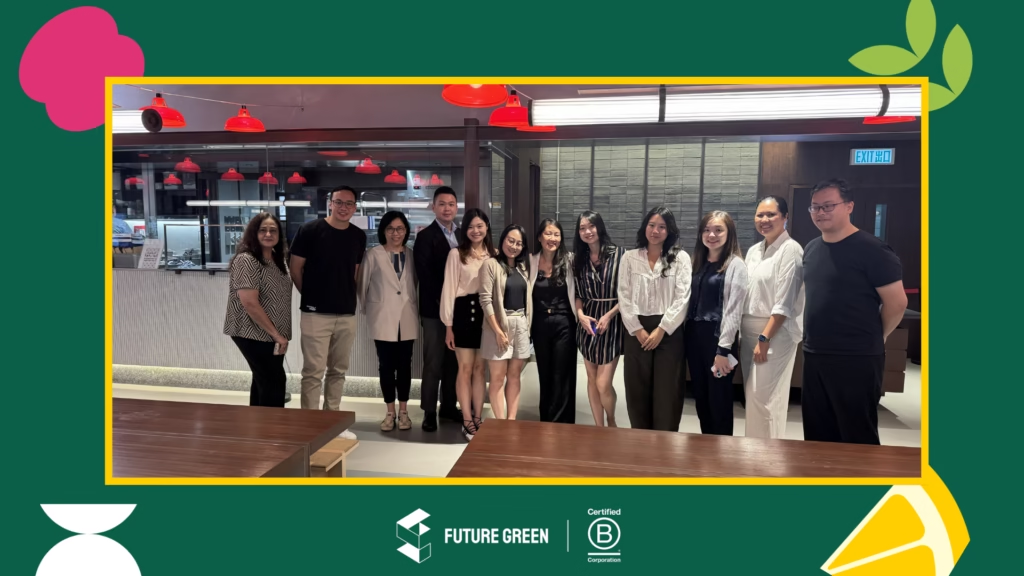
Our community coming together to turn food systems into low-carbon, high-value solutions.
Reducing greenhouse gas emissions is often framed as a large-scale, complex challenge. But for the food and hospitality industry, some of the most impactful solutions are surprisingly practical, and already within reach.
At our April Future Green Members Monthly Meetup, hosted at Tong Chong Kitchen, the conversation focused on how businesses can reduce emissions through better decisions across food systems, operations, and waste management. As a space that brings together food, community, and experimentation, Tong Chong Kitchen provided the ideal setting to explore how sustainable practices can be applied in real-world kitchen environments.
The session featured Tommy Leung, Founder, and Warton Chieng, Director of Business Development at HakkoBako, who shared how innovation in food processing and fermentation can transform waste into opportunity
🌍 Why Food Systems Matter
Food systems contribute around one-third of global greenhouse gas emissions, yet they are often overlooked in mainstream climate discussions.
As highlighted during the session, industries tend to focus on energy, transport, or buildings, while food remains “the elephant in the room”, complex, but unavoidable.
This makes food one of the most immediate and actionable areas for businesses looking to reduce their environmental impact.
🍽️ The Operational Challenge
In cities like Hong Kong, food waste is not just an environmental issue, but an operational one.
Many businesses face the same challenge: managing surplus food can be costly due to logistics, handling, and limited processing options.
This creates a gap between intention and action, where businesses want to reduce waste, but lack practical, scalable solutions.
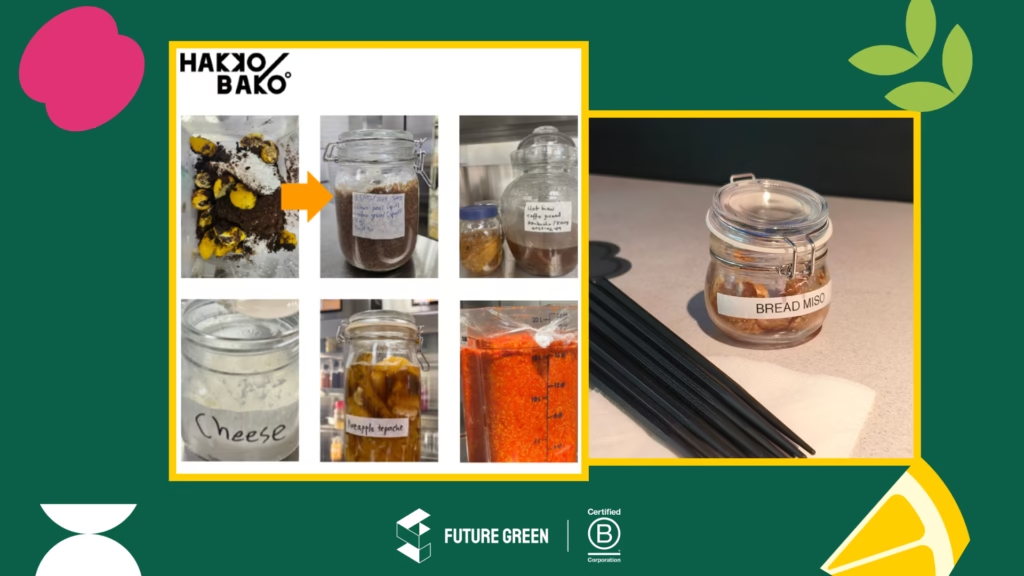
From food scraps to flavour: fermentation in action, transforming everyday by-products into high-value creations like bread miso.
🧪 Fermentation as a Practical Solution
A key focus of the session was fermentation, not as a niche concept, but as a practical tool for modern kitchens.
By using controlled fermentation processes, food by-products can be stabilised, extended in shelf life, and transformed into entirely new ingredients.
As Warton shared:
This shift allows kitchens to move from disposal to transformation, integrating circular thinking directly into daily operations.
🔄 Rethinking Production and Supply Chains
One example discussed was localising production. Instead of relying on imported ingredients like miso, which involve long supply chains and cold storage, businesses can produce similar products on-site.
This reduces transport emissions, simplifies logistics, and gives businesses greater control over their supply chains.
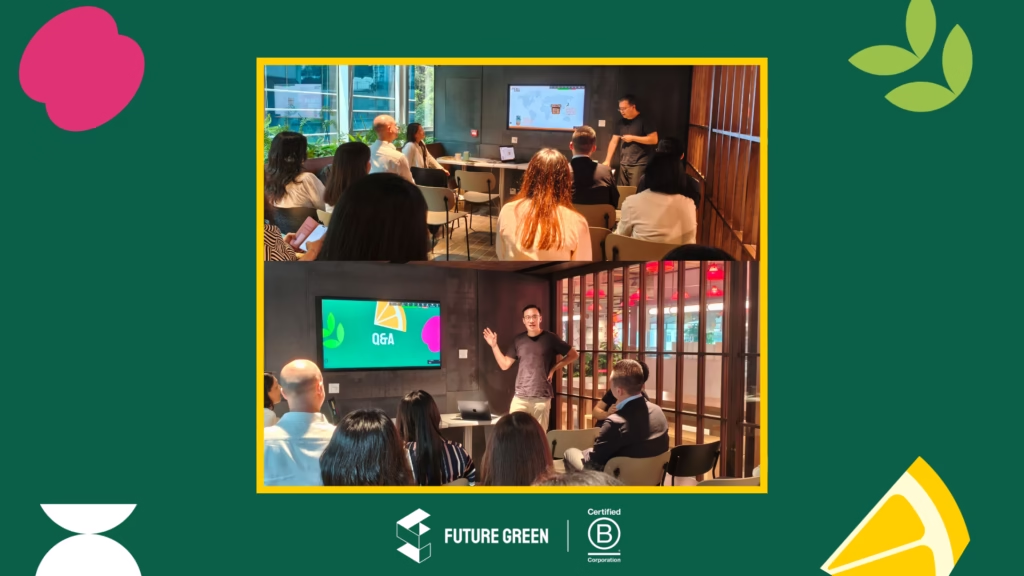
Bringing ideas to life: exploring fermentation and smarter food systems with Hakko Bako.
💡 Where Innovation Meets Business Value
A defining insight from the session was that sustainability is not a cost center, but rather a powerful driver of margin creation. By applying fermentation to existing supply chains, businesses can move beyond traditional ‘waste management’ and begin the process of resource recovery.
This shift creates value in four distinct ways:
- Monetising Byproducts: Transforming what was previously disposal overhead into high-margin, proprietary inventory.
- Supply Chain Insulation: Lowering the ‘total cost of ownership’ of ingredients by reducing reliance on volatile external logistics and imported goods.
- Maximising Resource Yield: Extracting greater commercial value from every dollar spent on raw materials.
- Competitive Differentiation: Developing signature, ‘in-house’ products that cannot be commoditised or replicated by competitors.
When we transform modest ingredients into premium assets, we aren’t just solving an environmental problem; we are implementing a smarter, more profitable way to operate in a resource-constrained market.
💬 Audience Insight: The Challenge of Adoption
During the Q&A, an important challenge emerged around adoption, particularly for larger organisations.
Introducing new approaches like fermentation can be difficult due to internal processes, regulatory requirements, and food safety concerns. The novelty of these methods can make QA and compliance teams hesitant.
However, this also presents an opportunity. Kitchens can begin by experimenting on a smaller scale, outside of core operations, to test processes, build confidence, and demonstrate value before wider implementation.
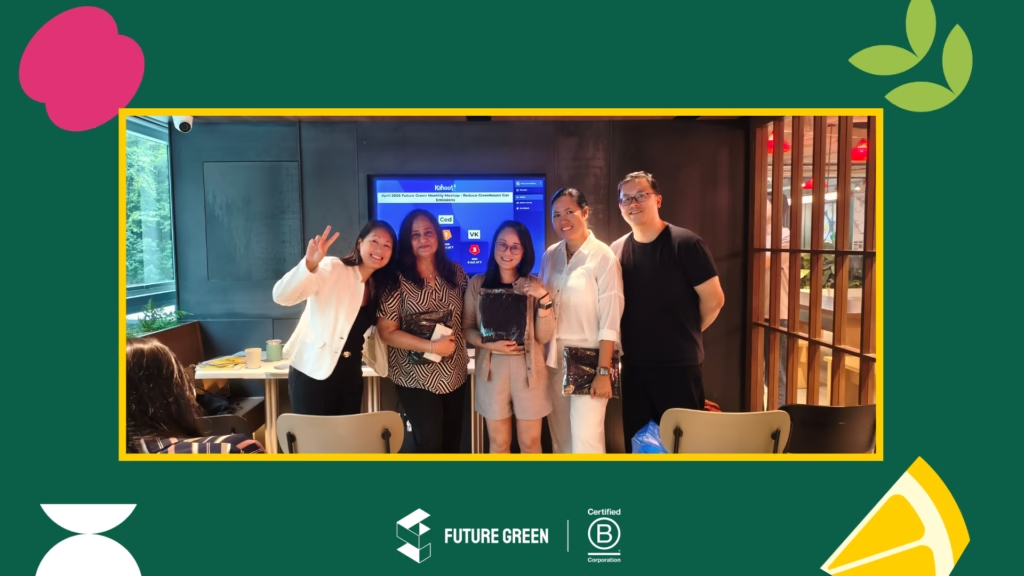
🎉 Engaging the Community
The session wrapped up with an interactive Kahoot quiz, testing participants on key concepts around emissions, food systems, and innovation.
Congratulations to Ced, Yvonne and Veena for topping the leaderboard and winning a Hakko Bako t-shirts.
Moments like these added a fun and engaging layer to the session, reinforcing learning while bringing the community together.
🌱 A Shift in Perspective
Ultimately, the biggest takeaway was not just about technology, but about mindset.
When kitchens begin to see by-products as part of the process rather than waste, new opportunities emerge, for efficiency, creativity, and value creation.
And in that shift, food systems move closer to becoming part of the climate solution.
💚 What’s Next?
If this conversation on reducing greenhouse gas emissions resonated with you:
🔗 Connect with HakkoBako to learn how upcycling and on-site solutions can help transform food waste into high-value products
👉 Join the Future Green Membership for practical tools, expert insights, and a community driving real change in food and hospitality
📅 Book a discovery call to explore how we can support your sustainability journey
Because reducing emissions isn’t just about impact. It’s about running smarter, more resilient businesses.
——————————————————————————————————–
How sustainable is your menu?
Are you curious about your food’s impact?

Continue the Conversation 💬
Conversations like these remind us that reducing emissions is not just about technology or policy. It requires collaboration across the food system, and better everyday decisions around sourcing, operations, and waste.
📍 Join us next month online on 12 May 2026 4PM-5PM HKT / 9AM -10AM UKT, where we’ll explore the next important topic: Reducing Food Loss and Waste, featuring Winnow Solutions. 🌍🌱
“Thanks for inviting me to the Future Green Meetup! I was impressed with the high level of engagement. Good Job on creating such a community!”
Amanda Cundiff
“We have just become a member of this community and the meet-ups are very well organised and we were able to drive awareness for our initiatives. Keep it up, Futuregreen!”
Jo Soo Tang
Founder of r é n Hong Kong
