You’re Throwing Away the Most Expensive Thing in Your Kitchen 🗑️

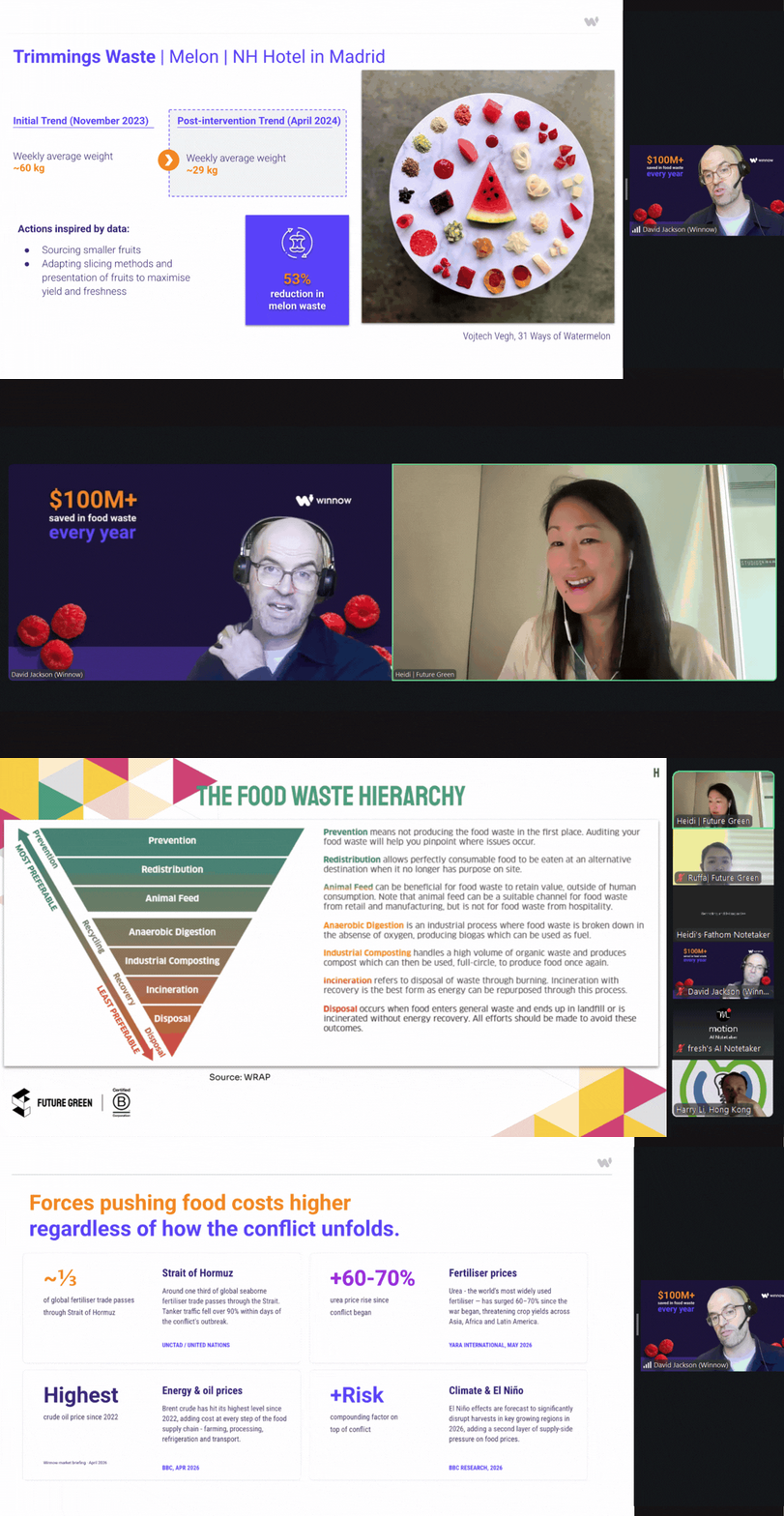
Our community coming together online to explore how reducing food waste can create smarter, more efficient, and more resilient food businesses.
What if the biggest opportunity to improve profits, reduce emissions, and future-proof food businesses was hiding inside the bin?
That was one of the biggest takeaways from our May Future Green Members Monthly Meetup, where sustainability leaders, hospitality professionals, consultants, chefs, and food businesses came together online to explore one urgent topic: reducing food loss and waste.
This month’s session featured David Jackson, Director of Marketing and Public Affairs at Winnow, a company helping commercial kitchens use AI to better understand and reduce food waste globally.
And David opened the conversation with a line nobody on the call will forget:
Strange? Maybe.
Necessary? Absolutely.
Because behind every discarded croissant, tray of scrambled eggs, or untouched buffet item lies a hidden operational cost many kitchens still fail to measure.
 Turning food waste data into smarter kitchen decisions. (Source: Winnow)
Food Waste Is Bigger Than Most Businesses Realise
Around one-third to 40% of all food globally is never eaten, while food waste contributes significantly to greenhouse gas emissions through methane released in landfill.
But one of the strongest takeaways from the session was that waste reduction is not simply about “being greener.” It is also about protecting margins in a time of rising food costs and supply chain pressures.
David shared that many commercial kitchens unknowingly waste between 4% to 15% of purchased food, with some operations wasting even more.
For hospitality businesses already facing inflation and operational pressure, that is a major hidden cost.
 Making food waste visible, measurable, and preventable. (Source: Winnow)
Why Measurement Changes Everything
A recurring word throughout our Future Green Meetup was visibility. As Heidi highlighted during the session, when waste is not measured, it remains invisible.
This is where Winnow’s AI system comes in. Their technology combines cameras, weighing scales, and computer vision AI to identify food being discarded in real time.
The goal is not to create more work for chefs. In fact, the process is designed to be almost effortless for kitchen teams. Staff simply dispose of food as normal while the system automatically records what is being wasted, how much it weighs, and its associated cost.
This data then helps kitchens identify patterns:
- Which menu items are consistently overproduced
- Which ingredients are being spoiled
- Which dishes customers leave unfinished
- Where operational changes can quickly reduce waste
The discussion reinforced something many businesses overlook: prevention is far more impactful than simply diverting waste from landfill.
The Breakfast Buffet Challenge
According to Winnow’s data, buffets are often one of the most wasteful areas within hospitality because kitchens prepare large volumes of food before knowing exact guest demand.
And surprisingly, one of the biggest waste items across hotels?
Scrambled eggs.
David shared a case study from a Marriott hotel in London where Winnow identified excessive waste from breakfast service. By introducing smaller batch cooking and live cooking stations during peak hours, the hotel significantly reduced wasted eggs.
Another standout example came from Hilton hotels in the UAE.
After measuring food waste across breakfast operations, Hilton achieved a reduction of more than 60% in food waste per guest served within just a few months.
What impressed us most was not just the technology itself, but the mindset shift behind it.
The conversation was not about blame. It was about creating visibility so teams could improve together.
David also shared a strong Asia-Pacific example involving Mandarin Oriental Hong Kong. According to Winnow’s data, the hotel achieved an overall food waste reduction of more than 70%, saving over 21,000 meals annually and reducing costs by more than HK$300,000. It showed that food waste reduction is not only possible at scale, but can also deliver measurable operational and financial results locally.
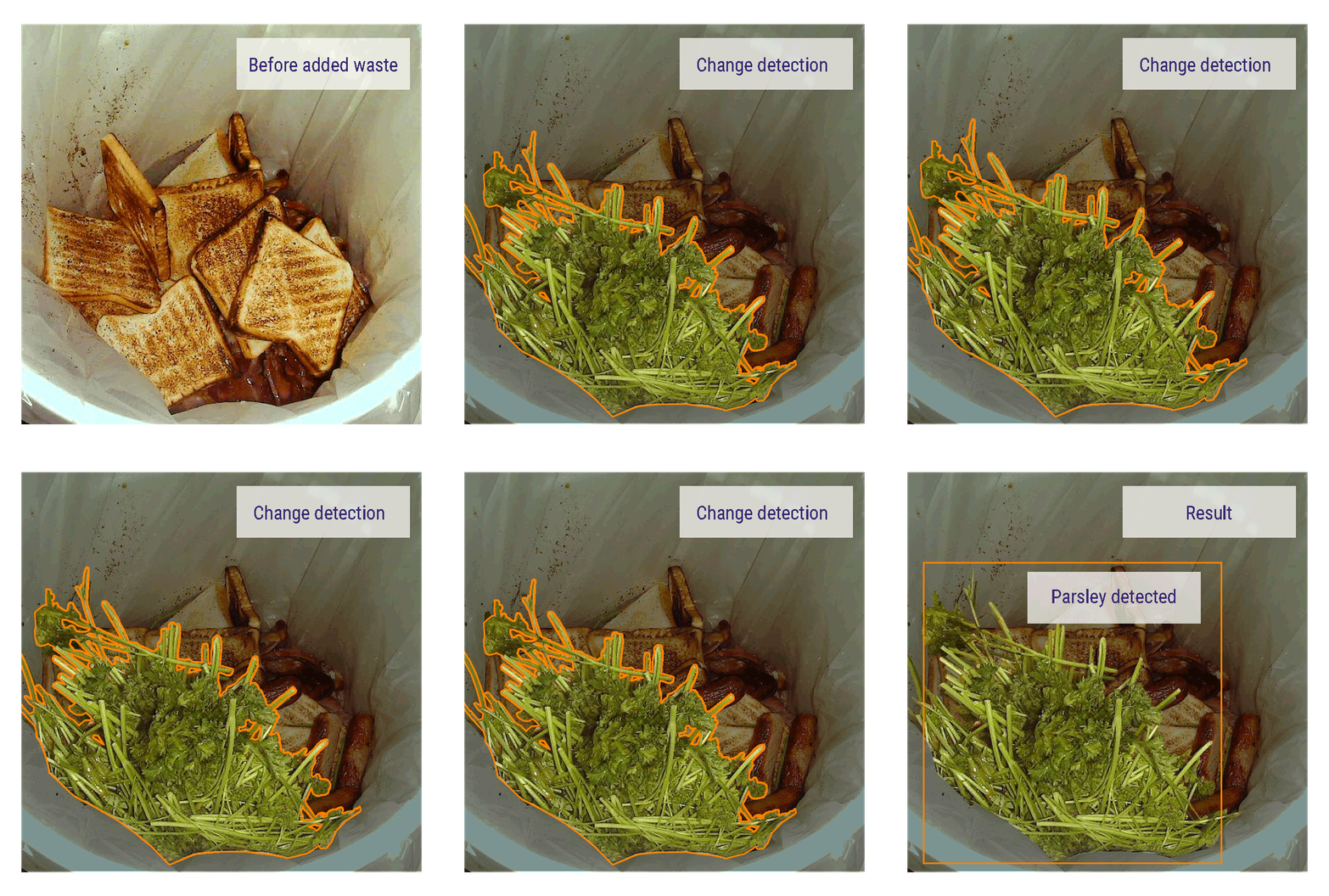 AI-powered food waste tracking helping kitchens identify exactly what is being wasted and where prevention can start. (Source: Winnow)
AI Is Useful, But People Drive the Change
While AI was a major theme throughout the session, David repeatedly emphasised something important:
Winnow supports kitchens with food waste coaching, operational training, and culinary guidance alongside its technology platform. Chefs receive insights into overproduction, spoilage, trim waste, and guest behavior, allowing them to adjust menus and prep methods over time.
One example that sparked a lot of discussion was a hotel reducing melon waste simply by sourcing smaller fruit and adjusting slicing techniques.
Another involved analysing unfinished pastries left on guests’ plates. Hilton discovered guests rarely finished full-sized croissants, so they reduced portion sizes and lowered waste without compromising the guest experience.
It was a reminder that sustainability is often less about grand innovation and more about operational awareness.
🎉 Engaging the Community

The session wrapped up with an interactive Kahoot quiz, where participants tested their knowledge on food waste, buffet operations, waste prevention, and sustainable kitchen practices.
Congratulations to Eddie Pang from East Hotel for topping the leader board and winning an exclusive consultation from Winnow.
Moments like these brought an engaging and interactive energy to the session through shared learning and conversation.
🌍 Why This Conversation Matters
At Future Green, we often talk about systems thinking and practical sustainability.
This meetup reflected both.
What stood out most was how achievable many of these changes actually are once businesses begin measuring waste consistently.
Because ultimately, waste that is invisible is very difficult to reduce.
And whether through AI tools, manual audits, or simple kitchen tracking systems, measurement creates awareness and awareness creates action.
💬 Audience Insights and Q&A
The live Q&A brought valuable operational insights from hospitality and food service professionals across the Future Green community.
💬 Q: Are businesses focusing too much on diversion instead of prevention when it comes to food waste?
A: David explained that while recycling and diversion from landfill are important, prevention should always be the priority. Once food is wasted, valuable resources such as ingredients, labor, water, and energy have already been lost.
💬 Q: Why should businesses invest in a solution like Winnow instead of simply tracking food waste manually on paper?
A: David explained that it depends on the business’s objectives. Manual audits using paper and scales can still help teams understand what is happening operationally. However, for businesses managing margin pressure, sustainability targets, or larger operations, a solution like Winnow can automate measurement, provide deeper operational insights, and support more effective long-term waste reduction.
💬 Q: Do kitchens resist food waste tracking technology or changing operational habits?
A: David shared that change management is an important part of the process. Winnow focuses on making waste tracking simple and non-disruptive for kitchen teams, while helping chefs understand the operational and financial value behind the data.
💚 What’s Next?
If this conversation on reducing food loss and waste resonated with you:
🔗 Get a demo with Winnow to discover how AI and data can help kitchens reduce food waste, improve efficiency, and uncover hidden operational costs
👉 Join the Future Green Membership for practical tools, expert insights, and a growing community driving positive change across food and hospitality
📅 Book a discovery call to explore how Future Green can support your sustainability journey
Because reducing food waste is not just about sustainability. It is about building smarter, more resilient, and more efficient food businesses.
💬 Continue the Conversation
Conversations like these remind us that reducing food waste is not only about technology. It also requires better operational awareness, stronger collaboration, and everyday decisions that shape how food is valued across the system.
📍 Join us next month for our Future Green Members Monthly Meetup as we explore our next important topic: Supporting Animal Welfare, featuring Global Food Partners. 🌍🐾
How sustainable is your menu?
Are you curious about your food’s impact?

“We have just become a member of this community and the meet-ups are very well organised and we were able to drive awareness for our initiatives. Keep it up, Futuregreen!”
Jo Soo Tang
Founder of r é n Hong Kong
“Thanks for inviting me to the Future Green Meetup! I was impressed with the high level of engagement. Good Job on creating such a community!”
Amanda Cundiff
