Good Food Shouldn’t Go to Waste: The Story Behind Yindii’s Growing Impact


Heidi Spurrell, CEO of Future Green interviewing Mahima Rajangam, Co-Founder and Chief Marketing Officer of Yindii
Every day, perfectly good food is thrown away while millions of people are looking for affordable meals. At first glance, it seems like two separate problems. But for Yindii, they’re part of the same solution.
In the latest episode of the Future Green Podcast, Heidi Spurrell, Founder and CEO of Future Green, sat down with Mahima Rajangam, Co-Founder and Chief Marketing Officer of Yindii, to explore how a simple idea, connecting surplus food with consumers has grown into one of Asia’s leading food rescue platforms.
From reducing waste and supporting businesses to making sustainable living more affordable, the conversation highlighted why tackling food waste is one of the most practical climate actions we can all take.
🎧 Listen and watch our full podcast interview here.
A Purpose-Driven Journey
Mahima’s path to co-founding Yindii wasn’t planned. With a background in engineering, business, and more than a decade in Southeast Asia’s e-commerce and food technology sectors, she had always been passionate about creating positive social impact through volunteering and community work.
It was during the COVID-19 pandemic that everything changed.
Meeting Yindii’s founder, Louis, gave Mahima the opportunity to combine technology, sustainability, and purpose into one mission: helping ensure good food never goes to waste.
Why Food Waste Deserves More Attention
Many people understand climate change, but few realise just how significant food waste is.
As Mahima explained during the podcast, food waste contributes around 10% of global greenhouse gas emissions, making it one of the fastest and most effective areas where individuals and businesses can reduce their environmental impact.
Yet the challenge extends beyond emissions.
Businesses lose revenue when surplus food cannot be sold. Consumers face rising food prices. At the same time, perfectly edible food is discarded every day.
Yindii exists to connect those dots.

Turning Surplus Into Opportunity
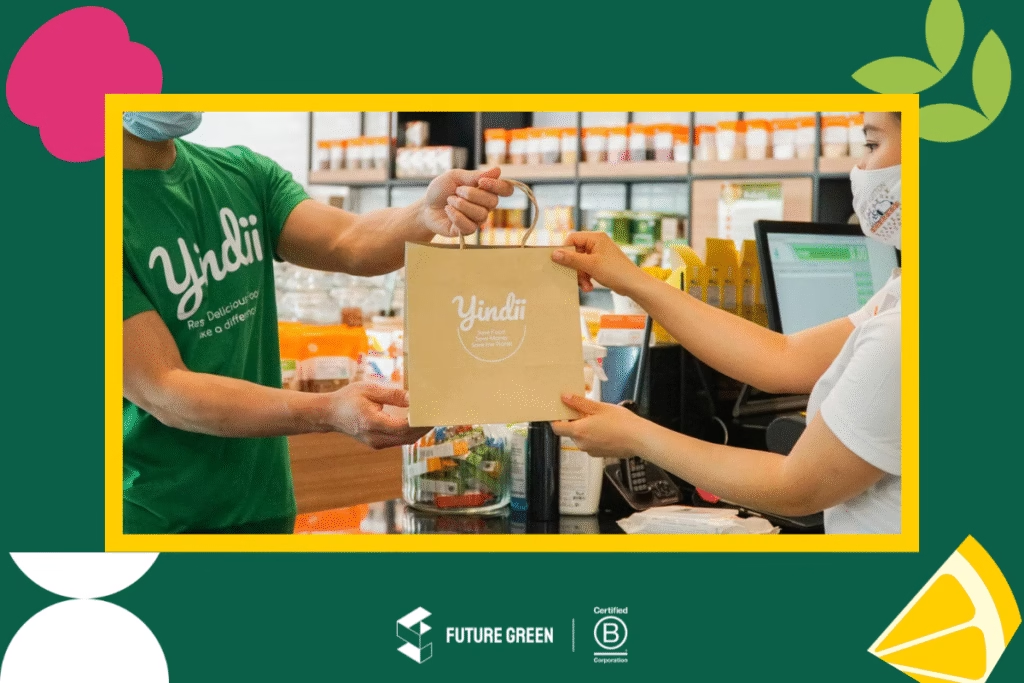
Through the Yindii app, restaurants, cafés, bakeries, supermarkets, hotels, and food retailers package surplus food into discounted “surprise bags” that customers can purchase. The bags are available at a minimum 50% discount, often even more.
It’s a model Mahima describes as a true win-win-win.
Businesses recover revenue that would otherwise be lost. Consumers access quality food at a lower cost. And fewer meals end up in landfill.
One of the biggest misconceptions, however, is that discounted food must somehow be lower quality.
As Mahima explained, the food available through Yindii is often exactly the same food customers would have purchased at full price just hours earlier. The only difference is timing.
Changing that perception has been one of Yindii’s biggest challenges but also one of its greatest opportunities.
Sustainability That Makes Financial Sense
One reason businesses are increasingly embracing Yindii is because reducing food waste also improves profitability.
Many food businesses intentionally prepare slightly more food than they expect to sell so customers always have a choice until closing time. Traditionally, much of that surplus was simply written off.
Today, Yindii helps businesses recover some of that value while reducing waste.
As awareness grows and sustainability expectations increase, Mahima has seen attitudes shift dramatically.
Hotels Are Becoming Unexpected Sustainability Leaders
One of the most fascinating parts of the conversation centred on hotels.
Buffets have long been associated with significant food waste, particularly across Asia. Yet Mahima explained that hotels have become some of Yindii’s most enthusiastic partners.
International hotel groups increasingly have ambitious ESG commitments and food waste reduction targets. Instead of disposing of surplus buffet food, many are now creating Yindii surprise bags or allowing customers to rescue buffet food during the final minutes of service.
It’s a practical example of sustainability aligning with business goals rather than competing with them.
Meeting People Where They Are
Perhaps one of the biggest lessons Yindii has learned is that not everyone joins for the same reason.
Some people are motivated by climate action.
Others simply appreciate saving money.
And that’s perfectly okay.
Once customers begin using the app, they quickly discover they’re not sacrificing quality. At the same time, Yindii shows users how many meals they’ve rescued, how much money they’ve saved, and the environmental impact they’ve created—making sustainability visible and rewarding.
Small Actions Create Big Change
When asked what advice she would give to businesses and individuals beginning their sustainability journey, Mahima kept her answer refreshingly simple.
Whether it’s carrying reusable items, rescuing surplus food, or identifying one area of improvement within a business, lasting change comes from consistent action rather than perfection.
It’s a message that strongly aligns with Future Green’s own approach to sustainability: empowering people to make practical, achievable changes that grow over time.

One Story That Says It All
Towards the end of the conversation, Mahima shared a story that perfectly captures Yindii’s impact.
She recently met a customer in Hong Kong who had rescued more than 100 meals through the app every month.
When Mahima looked at the customer’s statistics, she discovered something remarkable.
For Mahima, stories like these provide daily motivation.
They demonstrate that reducing food waste isn’t only about protecting the planet—it can also make everyday life more affordable while strengthening communities.
Final Thoughts
Food waste is often described as one of the world’s biggest environmental challenges.
Yindii shows it can also be one of our greatest opportunities.
By combining technology, consumer behaviour, and practical business solutions, the platform is proving that sustainability doesn’t have to be complicated. Sometimes, it can be as simple as rescuing today’s surplus meal instead of letting it go to waste.
As Mahima reminded listeners, before ordering your next meal, take a look in your fridge first.
“What can I save today?“ might be one of the most powerful sustainability questions we can ask.

________________________________________________________________________________________________________
Join the Future Green Membership
At Future Green, we believe meaningful change happens when passionate people come together to learn, share ideas, and take action.
Our membership connects sustainability professionals, food businesses, educators, and changemakers through exclusive monthly events, practical tools, expert insights, and inspiring case studies like Yindii’s.
If you’re ready to accelerate your sustainability journey and become part of a growing community creating real impact, we’d love to welcome you.
👉 Join the Future Green Membership today and help shape a more sustainable future—one action at a time.
🎙️ Listen to the Future Bites Podcast
Future Bites, the podcast by Future Green, brings you inspiring conversations with sustainability leaders, innovators, entrepreneurs, and changemakers who are driving positive impact across business, communities, and the planet.
Each episode explores practical solutions, real-world case studies, and fresh perspectives on sustainability, leadership, innovation, climate action, and systems change—giving you the insights and inspiration to create meaningful impact in your organisation and beyond.
👉 Listen to the Future Bites Podcast on Spotify

Interested in more?
2026
I Thought I Was Hosting a Facilitation Retreat. It Became Something Much More… THE FACILITATION PRACTICE LAB SERIES 1 OF 5.
 25th September
2026
Bringing Food Sustainability into the Classroom: Future Green’s Lunch & Learn at Chinese International School
21st September2026
BEYOND THE LABEL: WHAT’S REALLY BEHIND YOUR SEAFOOD?