Built-In, Not Bolted-On: Reflections from the Hong Kong Sport & Sustainability Summit 2026 – Rugby for Good

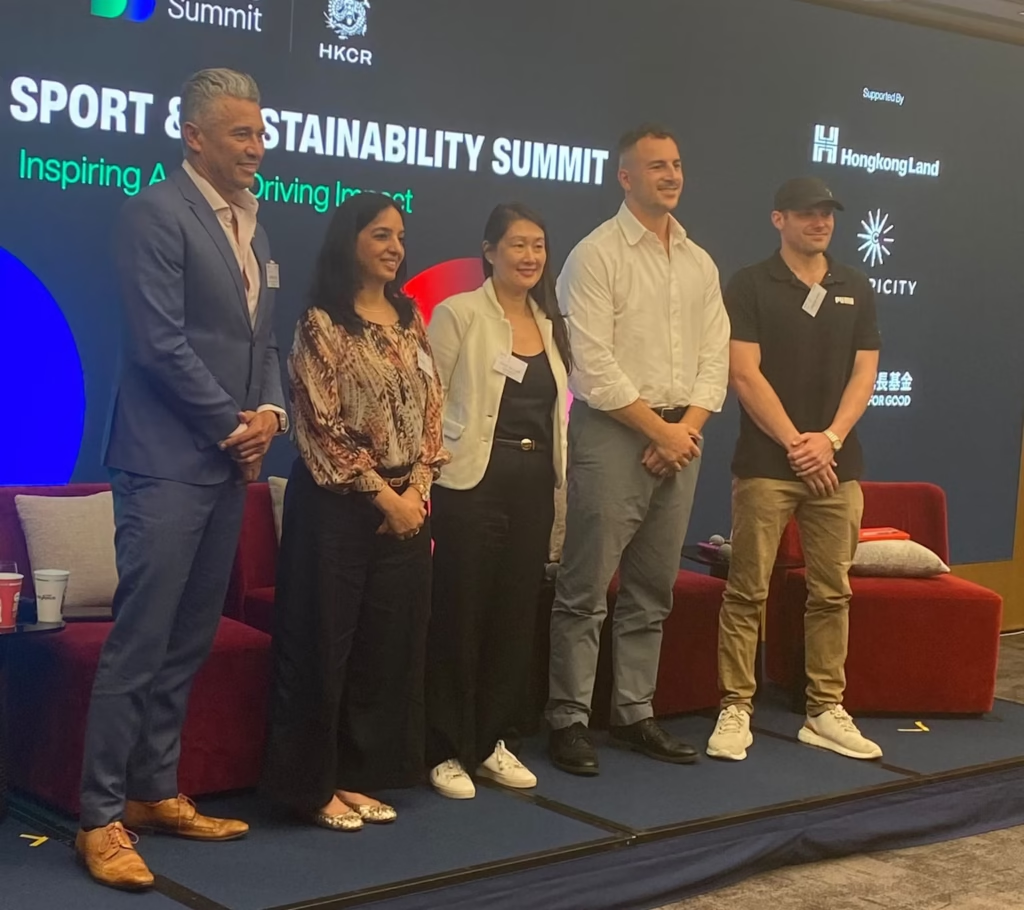
On stage with fellow panellists at the HK Sport & Sustainability Summit 2026: Michael Long (HK Land), Natasha Chawla (Muuse), Jamie Farndale (HK China Rugby) and Martijn Ros (Waste Wise)
Last week, I joined the Hong Kong Sport & Sustainability Summit 2026 – Rugby for Good as a panellist, alongside a mix of venue operators, sustainability leaders, and event organisers.
The conversations were practical, honest, and at times, a bit confronting. Because while sustainability in sport has come a long way, the gap between ideas and execution is still very real.
Setting the Scene
Hong Kong is moving in the right direction.
We heard how 30 million single-use cutlery sets were avoided in 2024 (info.gov.hk, 2024), and how food waste recovery has increased dramatically in just a few years (epd.gov.hk, 2025). Waste is trending down, and there is a clear push toward carbon neutrality (cnds.gov.hk, 2023).
But when you look at large-scale events like the Hong Kong Rugby Sevens, the reality becomes more complex.
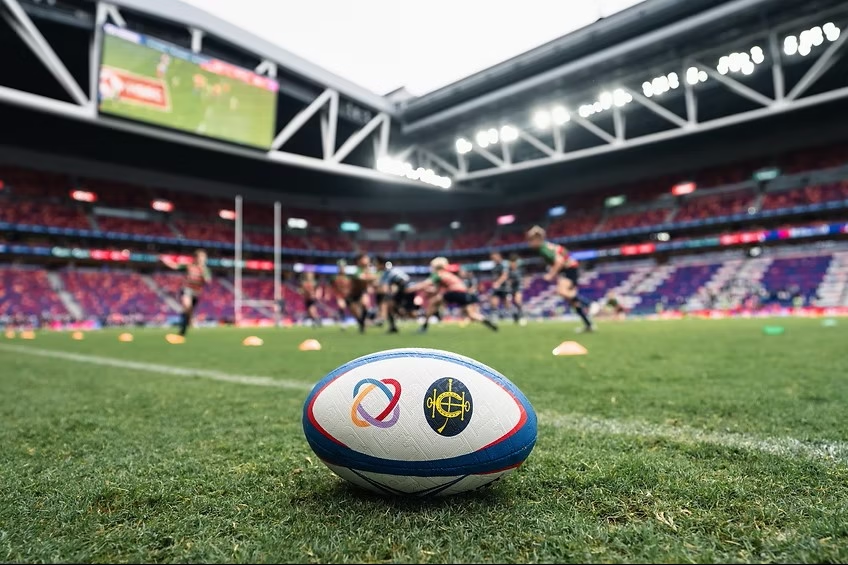
Image Source: Rugby for Good
The Scale of the Challenge
One stat that stuck with us: over 500,000 cups are used at the Sevens each year.
There have been attempts to introduce reusable systems, but return rates have hovered around 75%. That means one in four cups still doesn’t make it back.
Composting was also discussed as a solution, but it comes with its own constraints. It requires the right mix of materials, enough processing capacity, and time. After a large event, that process can take weeks.
The takeaway here was simple. There is no single fix.
What Actually Works
Across the panel, there was strong alignment on one idea. Sustainability needs to be designed into the system from the beginning.
We saw examples of this working globally:
- Reusable systems hitting over 98% return rates when friction is removed
- Venues turning food waste into compost on-site
- Smarter infrastructure like better bin placement and clearer waste streams
But the biggest unlock is not technology. It is behaviour.
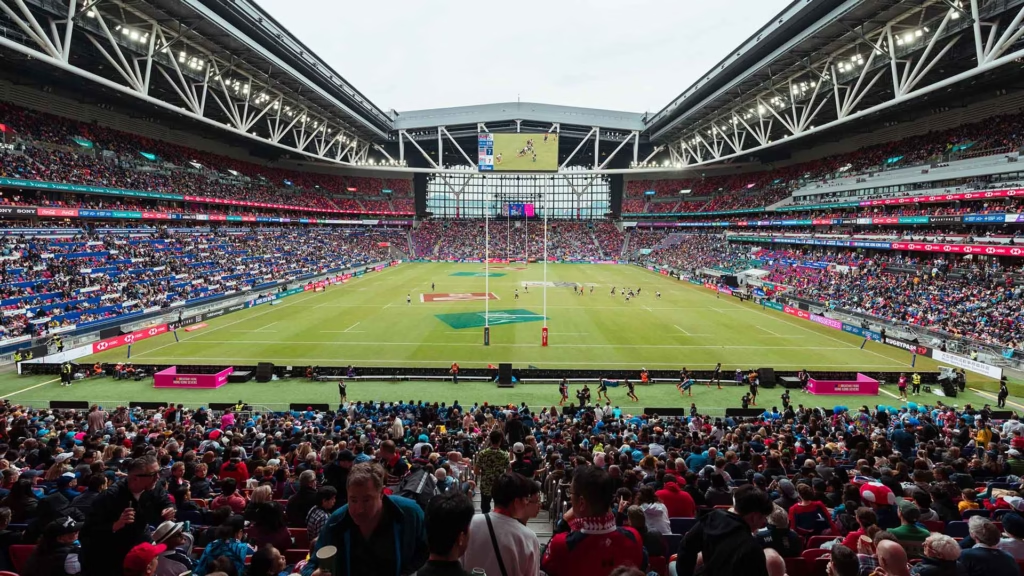
Hong Kong Sevens, Image Source: Hong Kong Tourism Board
Designing for Behaviour Change
This came up again and again during the discussion.
If the sustainable option is harder, people will not choose it.
Some of the most effective tactics are surprisingly simple:
- Putting bins where people naturally walk
- Making waste visible through transparent bags
- Removing bins from exits to avoid last-minute dumping
- Using gamification to make participation more engaging
And one point that resonated strongly. Staff behavior matters. If staff are not following the system, fans will not either.
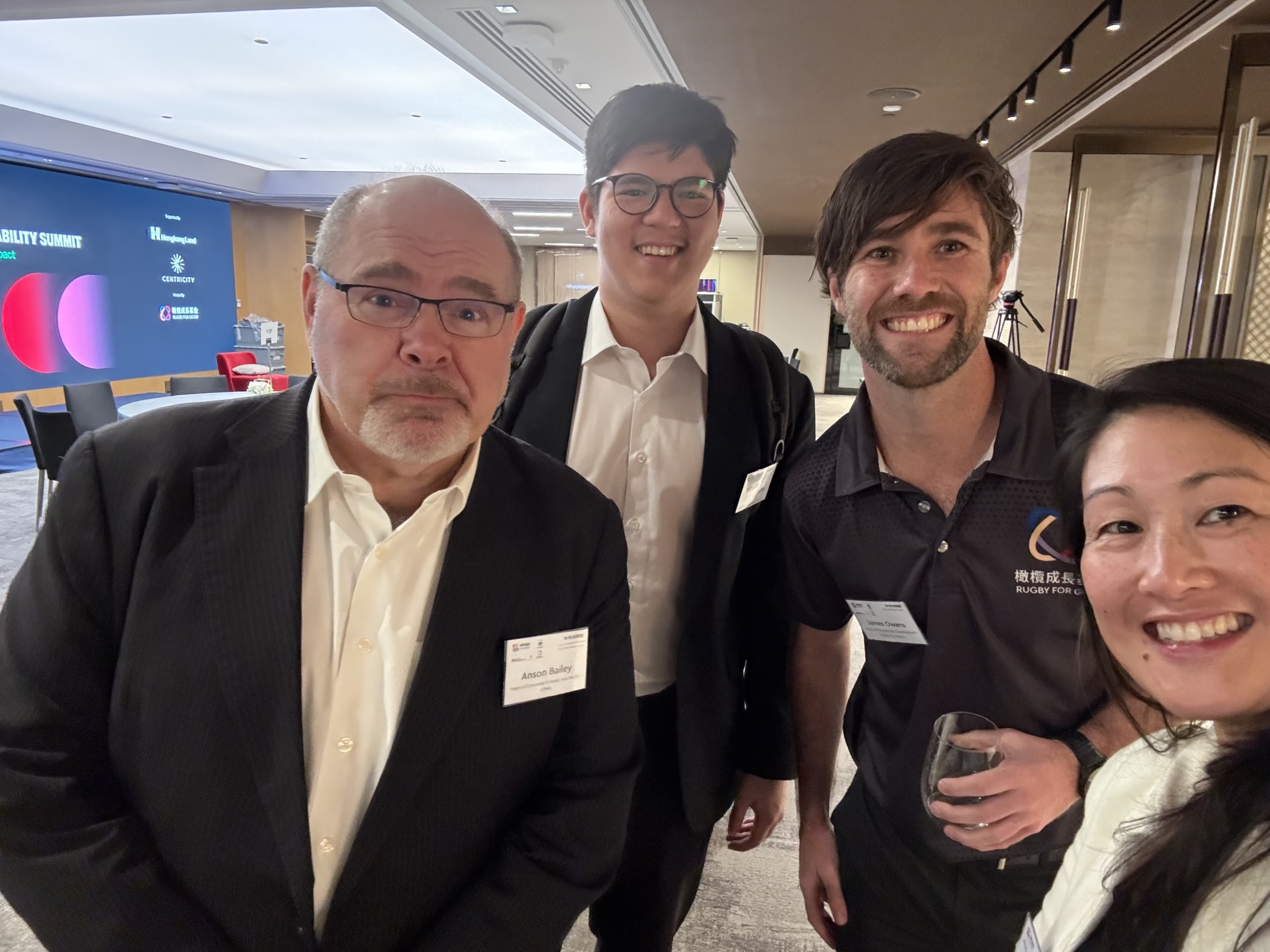
Connecting with industry leaders and changemakers at the HK Sport & Sustainability Summit 🌱
Food Is the Next Big Lever
Another area getting a lot of attention is food.
Food and beverage makes up a significant portion of event emissions, and there is growing interest in solutions like carbon-labeled menus and more flexible, plant-forward options.
What worked well in other markets is starting small. Test in VIP or controlled environments first, then scale once it works.
So What Happens Next?
The discussion wasn’t just about challenges. There were clear, practical next steps:
- Pilot reusable systems in smaller events before scaling
- Introduce carbon labeling in food and beverage
- Use real-time dashboards to track and share impact
- Engage younger audiences through hands-on activities
- Build local partnerships to close the loop, especially around compost
Final Thoughts
Sustainability is no longer about adding initiatives on top of an event. It is about designing the entire system differently.
Sport has the reach to influence millions of people in a very short time. If we get the systems right, the impact goes far beyond the event itself.

🌿 Want to embed sustainability into your events? Let’s talk
Whether you’re planning a sporting event, festival, or corporate experience, the challenge is the same: turning ideas into action.
At Future Green, we design practical, scalable solutions, from reusable systems and waste strategy to fan engagement and tracking impact. Check our sustainability events.
Looking to reduce waste and improve your event operations?
Book a call now or email us at hello@futuregreen.global
How sustainable is your menu?
Are you curious about your food’s impact?

Interested in more?
2026
I Thought I Was Hosting a Facilitation Retreat. It Became Something Much More… THE FACILITATION PRACTICE LAB SERIES 1 OF 5.
 25th September
2026
Bringing Food Sustainability into the Classroom: Future Green’s Lunch & Learn at Chinese International School
21st September2026
BEYOND THE LABEL: WHAT’S REALLY BEHIND YOUR SEAFOOD?