Beyond Good Intentions: How Businesses Can Make a Real Difference in Their Communities
 What does it really mean for a business to support its community?
Is it about sourcing locally, creating better working conditions, protecting vulnerable workers or keeping neighbourhood businesses alive?
At our October Future Green Members Meetup, we explored how social responsibility can become part of everyday business decisions, rather than something reserved for charitable initiatives or corporate social responsibility reports.
Hosted at House of Culture in Sai Ying Pun, this intimate gathering brought together Future Green members for an open conversation with Matt Friedman, CEO of The Mekong Club, and Chef Gavin Chin, Founder of House of Culture.
With a smaller group around the table, there was plenty of room for honest questions, personal stories and practical discussions about the challenges businesses face when trying to do the right thing.
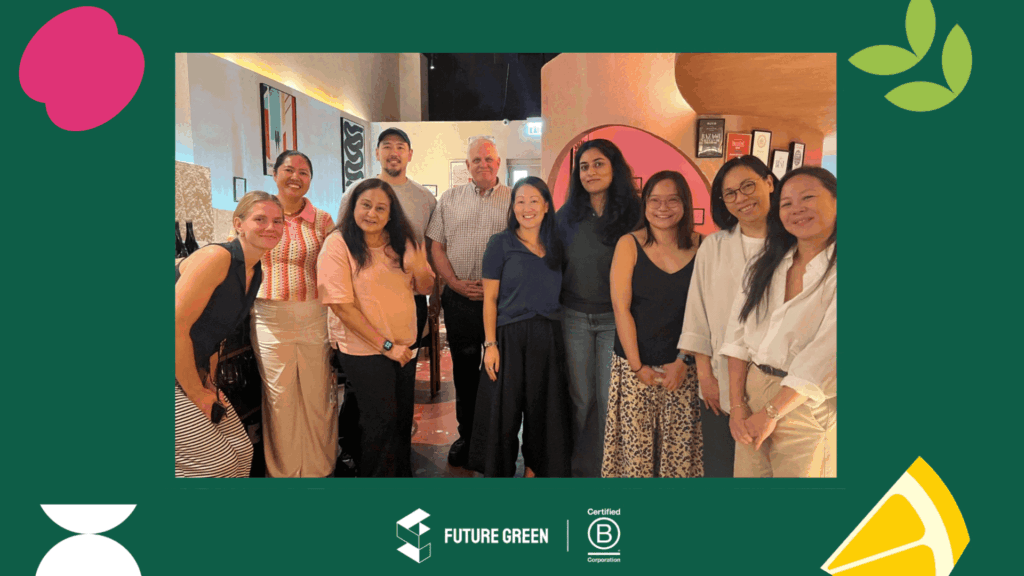
 Gathered around the table at House of Culture for our October Future Green Meet-up
The Hidden Human Cost Behind Our Supply Chains
For Matt Friedman, the fight against human trafficking began more than 35 years ago.
While working as a public health officer in Nepal, Matt encountered young girls who had been trafficked into sexual exploitation. One experience, involving an 11-year-old girl desperately asking to be rescued, stayed with him and helped shape his commitment to combating human trafficking.
Today, Matt leads The Mekong Club, an organisation working with businesses to prevent forced labour and modern slavery.
During our discussion, he shared the scale of the challenge. According to the International Labour Organization’s 2022 global estimates, approximately 50 million people worldwide were living in modern slavery, including 28 million in forced labour.
Yet the resources dedicated to addressing the problem remain far smaller than the profits generated through exploitation.
A New Face of Human Trafficking: Online Scam Centres
One of the most alarming parts of Matt’s discussion was the rise of trafficking into cyber scam operations across Southeast Asia.
What began as offshore casino operations evolved during the pandemic into large-scale online scam centres.
Matt explained how young professionals are recruited through attractive job advertisements promising generous salaries and exciting lifestyles. Once transported to these facilities, some discover they have been deceived and are forced to work long hours under threats of violence.
Many are made to carry out online romance and investment scams, manipulating victims into transferring their savings into fraudulent cryptocurrency schemes.
The discussion highlighted how human trafficking continues to evolve, making awareness and prevention increasingly important for businesses and individuals alike.
 Matt shared eye-opening insights on the 50 million people living in modern slavery and the evolving threat of online scam centres across Southeast Asia.
What Can Small Businesses Actually Do?
One of Matt’s strongest messages was that businesses do not need to be large corporations to make a difference.
Small and medium-sized enterprises can start by understanding where forced labour risks might exist within their own operations and supply chains.
Matt introduced The Mekong Club’s practical resources for SMEs, encouraging businesses to begin with a simple self-assessment and build from there.
The organisation’s Modern Slavery and SMEs: An Operational Guide provides practical guidance covering:
- Awareness and training: Helping employees recognise the warning signs of forced labour.
- Policies and leadership: Establishing clear expectations around human rights and ethical business practices.
- Supplier due diligence: Asking suppliers about their labour practices and extending those conversations further along the supply chain.
- Remediation: Taking appropriate action when potential exploitation is identified.
A particularly valuable takeaway was Matt’s emphasis on supporting suppliers to improve rather than relying solely on audits.
He shared an example from Malaysia where supplier training attracted far more participants than expected, demonstrating that businesses often want to do better but may lack the knowledge or resources to begin.
The lesson was clear:
Supporting Communities Starts Closer to Home
Our second conversation brought the discussion back to Hong Kong and the hospitality industry.
Chef Gavin Chin, Founder of House of Culture, shared how his restaurant’s philosophy centres on bringing neighbours together through food while supporting the traditional businesses that give a neighbourhood its character.
Drawing on his Australian-Malaysian background and culinary experience in Hong Kong, Gavin has developed an approach that combines familiar local ingredients with unexpected techniques and flavours.
At House of Culture, ingredients sourced from neighbourhood wet markets, dry goods stores and traditional Cantonese shops find their way into contemporary dishes.
Think Chinese olives incorporated into focaccia or fermented radish used in burgers.
Beyond creating interesting food, Gavin hopes these dishes will encourage younger customers to rediscover traditional ingredient shops that are increasingly disappearing from Hong Kong’s neighbourhoods.
It’s a reminder that restaurants can play an important role in keeping local food culture and small businesses alive.
A Different Approach to Kitchen Culture
Perhaps one of the most interesting parts of Gavin’s conversation was his approach to supporting the people working in his restaurant.
Hospitality is an industry known for demanding hours, high pressure and historically difficult working conditions.
Gavin spoke openly about these challenges and the changes he has introduced at House of Culture.
 Chef Gavin Chin of House of Culture shares how sourcing locally from traditional neighbourhood shops and rethinking kitchen culture can support both local businesses and hospitality staff.
One decision was to give his entire team Sundays off.
While weekends are traditionally among the busiest periods for restaurants, Gavin recognised that Sunday is often the only day hospitality workers can spend with family and friends who work conventional weekday schedules.
House of Culture also operates dinner-only service, allowing staff to begin their working day later.
Gavin shared how these decisions have helped create a more attractive working environment, particularly for experienced chefs seeking a better balance between their professional and personal lives.
He also holds weekly one-to-one conversations with every team member, checking on their wellbeing rather than focusing solely on performance.
These practices demonstrate that supporting the community also means looking after the people within your own business.
Challenging Toxic Kitchen Traditions
Our conversation also explored the difficult legacy of kitchen culture.
For decades, shouting, intimidation and extreme working hours have often been treated as necessary parts of becoming a successful chef.
Gavin acknowledged the pressure kitchens face to deliver consistent quality, but questioned whether harsh treatment should ever be accepted as the price of learning.
He also reflected on how younger generations of chefs are changing expectations around feedback, recognition and workplace culture.
The discussion raised an important question:
For Gavin, there is no perfect formula. Creating a healthier workplace requires constant reflection, honest conversations and a willingness to challenge practices that have long been considered normal.
Can Supporting the Community Be Good for Business?
Across both conversations, a common theme emerged.
Businesses face genuine commercial pressures, from rising operating costs and labour shortages to complex supply chains and increasingly competitive markets.
For restaurants in Hong Kong, these challenges are particularly visible.
Gavin discussed the difficulties of attracting and retaining hospitality workers, balancing costs and navigating changing dining habits.
He also shared why he chose not to participate in a recruitment arrangement that would have offered lower labour costs but raised concerns about workers’ living conditions.
His decision illustrated how business owners sometimes face difficult choices between financial savings and their responsibility towards people.
Meanwhile, Matt encouraged businesses to think beyond avoiding suppliers associated with exploitation.
Rather than focusing only on boycotts, he introduced the idea of a “buycott”, actively choosing to support companies demonstrating a commitment to ethical sourcing and fair labour practices.
Both perspectives showed that community support is not a separate activity from running a business.
It is reflected in who we hire, how we treat employees, where we source products and which businesses we choose to support.
 Chef Gavin Chin shares how House of Culture is fostering a healthier work environment and proving that ethical choices and business success go hand in hand.
Targeted Conversations, Meaningful Connections
At Future Green, we believe these conversations are an important part of building a community of businesses committed to creating positive change.
Whether discussing the global challenge of forced labour or the future of traditional neighbourhood shops in Hong Kong, the message was consistent:
A huge thank you to Matt Friedman of The Mekong Club for joining us once again and sharing his powerful experiences and practical resources.
Thank you also to Chef Gavin Chin and the House of Culture team for hosting us and offering such an open perspective on the realities of running a community-focused restaurant.
We’d also like to thank Invest Hong Kong (InvestHK) for sponsoring this meetup and supporting Future Green in bringing businesses together to learn, connect and exchange ideas.
📘 Free Resource: The Mekong Club’s Modern Slavery Toolkit for SMEs
Want to take the first step towards identifying and preventing forced labour in your business?
We’re sharing The Mekong Club’s Modern Slavery and SMEs: An Operational Guide, a practical toolkit designed to help small and medium-sized businesses address modern slavery risks.
The guide includes a supplier questionnaire, sample policies, training resources and practical steps for identifying risks and improving responsible sourcing.
👉 Download The Mekong Club’s Free SME Toolkit
Start by reviewing your own practices, then share the toolkit with your suppliers to encourage more responsible business practices throughout your supply chain.
What’s Next for the Future Green Community?
We’re continuing to explore opportunities for deeper conversations and more meaningful collaboration across our community.
Alongside our monthly meetups, we’re developing smaller, immersive retreats that bring together business owners and NGO leaders for strategic reflection, peer learning and practical problem-solving.
Following our recent facilitation retreat in Portugal, we’re looking ahead to another retreat in September 2027.
🤝 Join the Future Green Community
Want to connect with like-minded businesses, exchange practical ideas and explore how sustainability can create positive change?
Join our Future Green Membership to take part in monthly conversations, learn from industry experts and connect with people working to build a more sustainable and responsible food system.
Keep up to plate
Fortnightly stories from Asia's go-to food sustainability consultancy
Interested in more?
2026
How to Run a Retreat for Facilitators and Consultants – THE FACILITATION PRACTICE LAB SERIES 5 OF 5.
 30th October
2026
Why Great Teams Don’t Think Alike – THE FACILITATION PRACTICE LAB SERIES. BLOG 4 OF 5.
30th October2026
The Strategic Sprint: From the Messy Middle to a Roadmap You Can Actually Use – THE FACILITATION PRACTICE LAB SERIES 3 OF 5, PART 2 OF 2.