3 Priority Shifts Driving Sustainable Food Systems at TASIS Portugal🌱

Heidi Spurrell facilitating a sustainability workshop at TASIS, bringing together students, catering teams and school stakeholders to explore sustainable diets.
Put chefs, students, operators and leadership in one room and ask a simple question:
What does a sustainable, healthy diet actually mean here?
You get divergence. Fast.
Local vs seasonal.
Plant-forward vs balanced.
Cost vs quality.
Nutrition vs carbon.
Everyone has a lens.
Everyone is right – partially.
And that’s exactly why innovation workshops matter.
At TASIS, we brought together catering teams, senior students, sustainability leads and school stakeholders – not to debate theory, but to converge on action.
And we did.
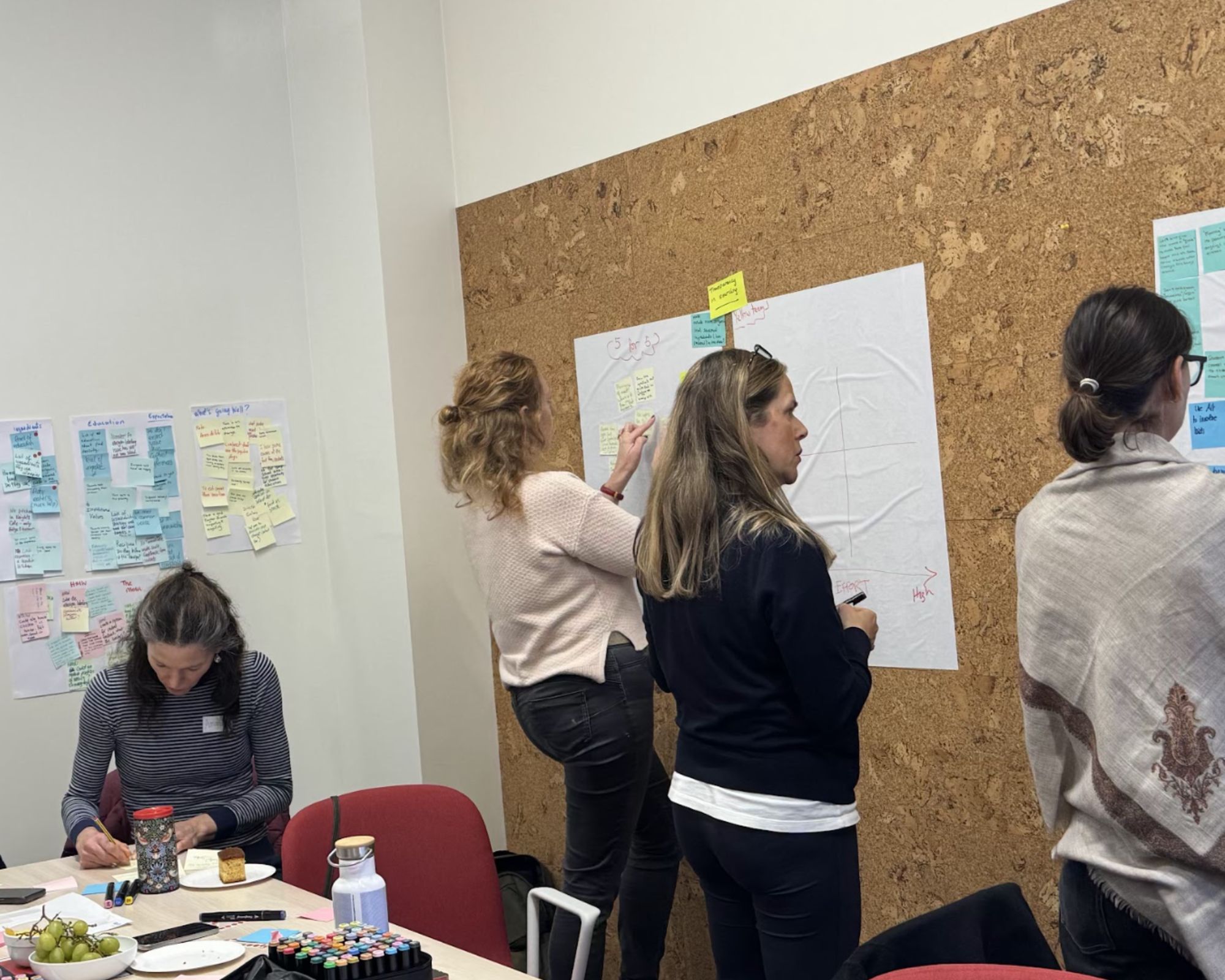
Workshop participants exchanging perspectives on communication, transparency and sustainability within the TASIS food system.
Despite differing perspectives, we aligned on three clear priority shifts:
1️⃣ Clearer Communication
Students didn’t fully understand sourcing decisions, waste data or menu logic.
Yet strong sustainability work was already happening behind the scenes.
The challenge?
Invisible impact changes nothing.
When students can’t see the reasoning behind decisions, engagement drops.
When information becomes visible, behaviour shifts.
Communication isn’t an add-on to sustainability strategy – it’s the delivery mechanism.
2️⃣ Greater Transparency in Ingredients
Where food comes from.
What’s in it.
How it’s produced.
These questions matter more than ever.
When ingredient sourcing and production methods are transparent:
- Trust increases
- Students feel included in the process
- Waste drops
- Accountability strengthens
Transparency turns food from a transaction into a learning moment.
3️⃣ Education on Food Systems Sustainability
Not abstract climate theory.
But practical understanding of how food connects to:
🌍 Biodiversity
❤️ Health
📉 Emissions
💰 Cost
🌱 Long-term resilience
When students understand how the system works, they engage with it differently.
They ask better questions.
They make more conscious choices.
They become participants – not just consumers.
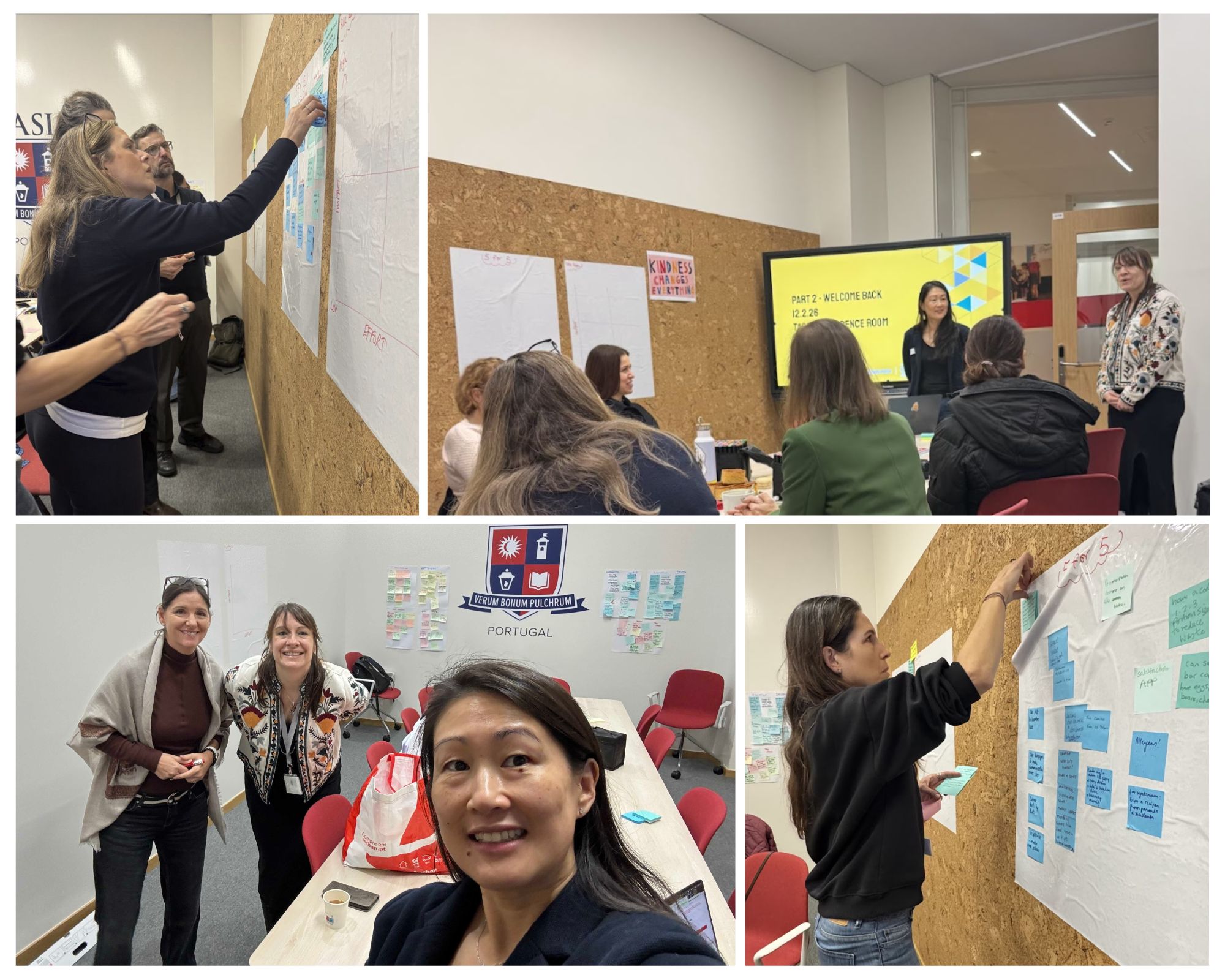
The TASIS community collaborating on sustainable food solutions, turning diverse viewpoints into shared priorities for a healthier and more resilient food system.
The Power of a Well-Designed Workshop
A structured workshop does something powerful:
It surfaces friction.
It makes blind spots visible.
It moves stakeholders from opinion to shared priorities.
Knowledge alone doesn’t change systems.
Structured convergence does.
If we want sustainable food strategies to land – in schools, hospitality, or large-scale events – we have to design the room as carefully as we design the menu.
Because sustainable change isn’t about having the “right” answer.
It’s about aligning the people responsible for delivering it.
We’re looking forward to progressing these priority areas in the months ahead.
And a huge thank you to the teachers, students, parents, and our catering partner Thomas Franks for supporting and engaging so openly in this workshop.
📩 Book a coffee chat with Heidi
