🐔 Towards a More Humane Food System: What Businesses Need to Know
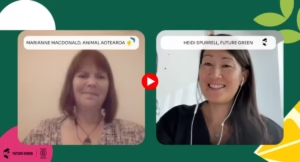
In this Future Bites podcast episode, we sit down with Marianne Macdonald, Executive Director of Animals Aotearoa, a New Zealand-based organisation transforming the way animals are treated in our food system.
Under Marianne’s leadership, the organisation works with food companies, policymakers, and the public to push for higher animal welfare standards — from cage-free eggs to the Better Chicken Commitment, a global movement reshaping how poultry are raised for food.
 Listen and watch our full podcast interview here
From Rescue to Reform
Marianne’s journey into animal welfare began long before her professional career. As a university student, she stumbled upon a science lab where newborn chicks were being discarded after experiments. An experience that would change her life. She rescued 13 of them and gave them a home in her parents’ garden, a moment that sparked her lifelong commitment to protecting animals and challenging factory farming practices.
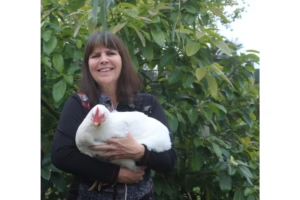
Marianne Macdonald holding Beluga, a rescued chicken. Her hands-on experience has shaped her lifelong commitment to improving animal welfare standards.
That philosophy led her to found Animals Aotearoa in 2020, a nonprofit dedicated to driving practical, evidence-based improvements in how animals are raised and sourced for food.
Defining High Animal Welfare
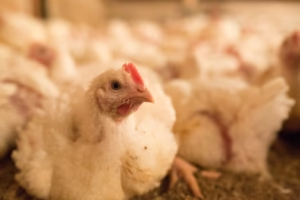
Chickens bred for meat on a New Zealand farm. Fast-growing breeds often experience serious health issues due to intensive breeding for rapid weight gain. Image credit: Farmwatch.
Animal welfare, Marianne explains, isn’t just about being kind, it’s about creating conditions where animals can live more natural, healthier lives. Yet current standards in many countries, including New Zealand and Hong Kong, remain low. Millions of hens are still confined in cages or crammed into sheds on factory farms, deprived of space to move freely.
She points out that caring about animal welfare doesn’t stop at ethics, it’s also a win for people and the planet, reducing environmental impact, improving food quality, and cutting antibiotic overuse in farming.
The Better Chicken Commitment
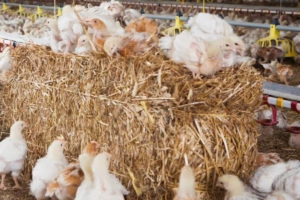
Chickens raised under Better Chicken Commitment standards, interacting with enrichments such as straw bales. Healthier, slower-growing breeds support improved welfare outcomes. Image credit: RSPCA UK – RSPCA Assured.
At the heart of Animals Aotearoa’s work is the Better Chicken Commitment — a set of science-based, internationally recognised standards to ensure chickens are bred and raised more humanely. These include using healthier breeds, providing more space, perches and other enrichments for the birds to interact with.
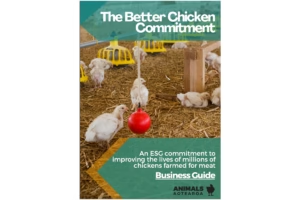
The Better Chicken Commitment Business Guide – helping food businesses raise welfare standards across the chicken supply chain.
Still, the shift comes with challenges. The supply chain for higher-welfare chicken needs time and investment to scale up. Marianne emphasises that when food businesses make clear, dated commitments, they give producers the confidence to invest in better systems — creating a ripple effect of change.
Collaboration Is Key
For Marianne, progress in animal welfare depends on partnership not confrontation, whenever possible. Working directly with food companies allows Animals Aotearoa to help them design realistic roadmaps, connect with higher welfare suppliers, and communicate their progress transparently.
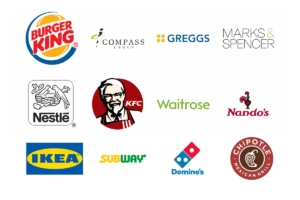
Leading brands stepping up to drive a kinder, more sustainable poultry system — these companies have signed the Better Chicken Commitment in some countries
To celebrate these efforts, awards like Hong Kong’s Good Egg Award now highlight companies making cage-free or higher-welfare commitments, shining a spotlight on businesses leading the way.
The Bigger Picture: Planet, People, and Poultry
Marianne draws a clear line between animal welfare and sustainability. Intensive animal farming, she explains, contributes to greenhouse gas emissions, antibiotic resistance, and poor community health. By shifting toward higher welfare practices, companies can improve not only animal lives but also human well-being and environmental resilience.
Educating and Empowering Consumers
Animals Aotearoa’s latest campaigns focus on public education helps consumers understand where their food comes from and how animals are raised. Marianne’s team recently tested powerful new messaging, comparing the fast, unnatural growth of meat chickens to the spread of cancer — a bold metaphor designed to spark empathy and awareness.
How You Can Make a Difference
For consumers, Marianne’s advice is simple: read labels, ask questions, and choose wisely. Look for terms like cage-free or free-range for eggs, and don’t be misled by vague marketing.
Looking Ahead
Shoppers navigating chicken choices in a New Zealand supermarket. Consumer demand plays a vital role in encouraging higher-welfare sourcing.
As Animals Aotearoa nears its fifth anniversary, Marianne is focused on expanding the Better Chicken Commitment, building partnerships across Asia-Pacific, and launching new education campaigns.
A healthier, slower-growing chicken breed used in higher-welfare farming systems. These breeds grow more naturally and are part of the global shift toward humane poultry production. Image credit: Wakker Dier.
✅ Take Action: Build a Higher-Welfare, Future-Ready Food System
Here are practical next steps for businesses, chefs, buyers, and consumers ready to move toward more ethical and sustainable food sourcing.
🐔 1. Want to know how to sign up for the Better Chicken Commitment?
If your organisation wants to switch to healthier breeds, better living conditions, lower antibiotic use, and improved welfare for chickens raised for meat:
👉 Visit Animals Aotearoa’s Better Chicken Commitment page or reach out to them at info@animalsaotearoa.org
🥚 2. Why switch to cage-free eggs? Explore the Cage-Free Egg Toolkit
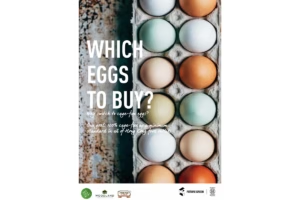
Our go-to toolkit empowering businesses to shift to cage-free eggs with clarity and confidence.
Cage-free sourcing is one of the fastest, most impactful ways businesses can improve animal welfare.
🌍 3. Global Standards Directory for Food Systems Sustainability
Looking to benchmark your organisation’s animal welfare, environmental, and social sourcing standards?
👉 Our Global Food Sustainability Standards ‘Eco Atlas’ Directory is your go-to reference.
It helps buyers and sustainability leads compare the most widely used global certifications, from animal welfare to environmental farming standards.
Interested in more?
2026
Three Days, Three Chefs, One Message: The Future of Food at SAVOUR by LIV Golf🌱
 8th March
2026
🌱 Day 2 at Savour by LIV Golf: Fueling the Body with Michelin-Starred Chef Shane Osborn at our Chef Demo – Eat the Rainbow! 🌈
8th March2026
🥢 Day 3 at Savour by LIV Golf: Exploring “Neighbourhood to Table” Flavors with Chef Gavin Chin 🥢