I Thought I Was Hosting a Facilitation Retreat. It Became Something Much More…

There is a big difference between learning about facilitation and actually practising it.
That belief was one of the reasons I created our first five-day Facilitation Practice Retreat in Sintra, Portugal.
After thousands of hours facilitating and training myself, I know that confidence does not come from collecting more frameworks. It comes from getting in the room, trying things, seeing what works, receiving feedback, and doing it again.
So, for five days, we brought together a small group of experienced facilitators and consultants at Quinta da Bufala in Sintra, Portugal, to do exactly that.
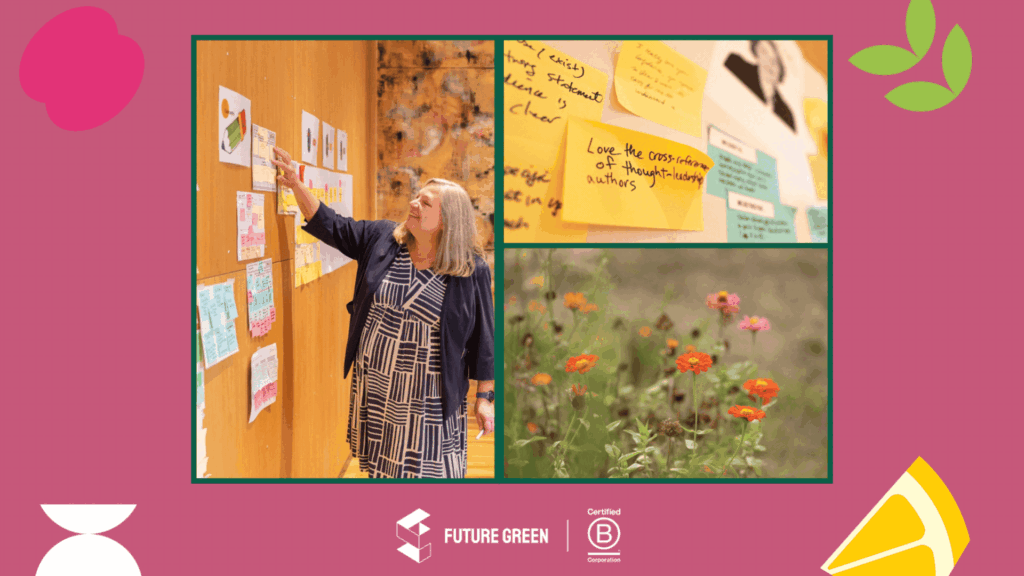
But by the end of the week, I realised we had created something bigger than a facilitation retreat.
One participant even described it as a mastermind.
And looking back, I think she was right.

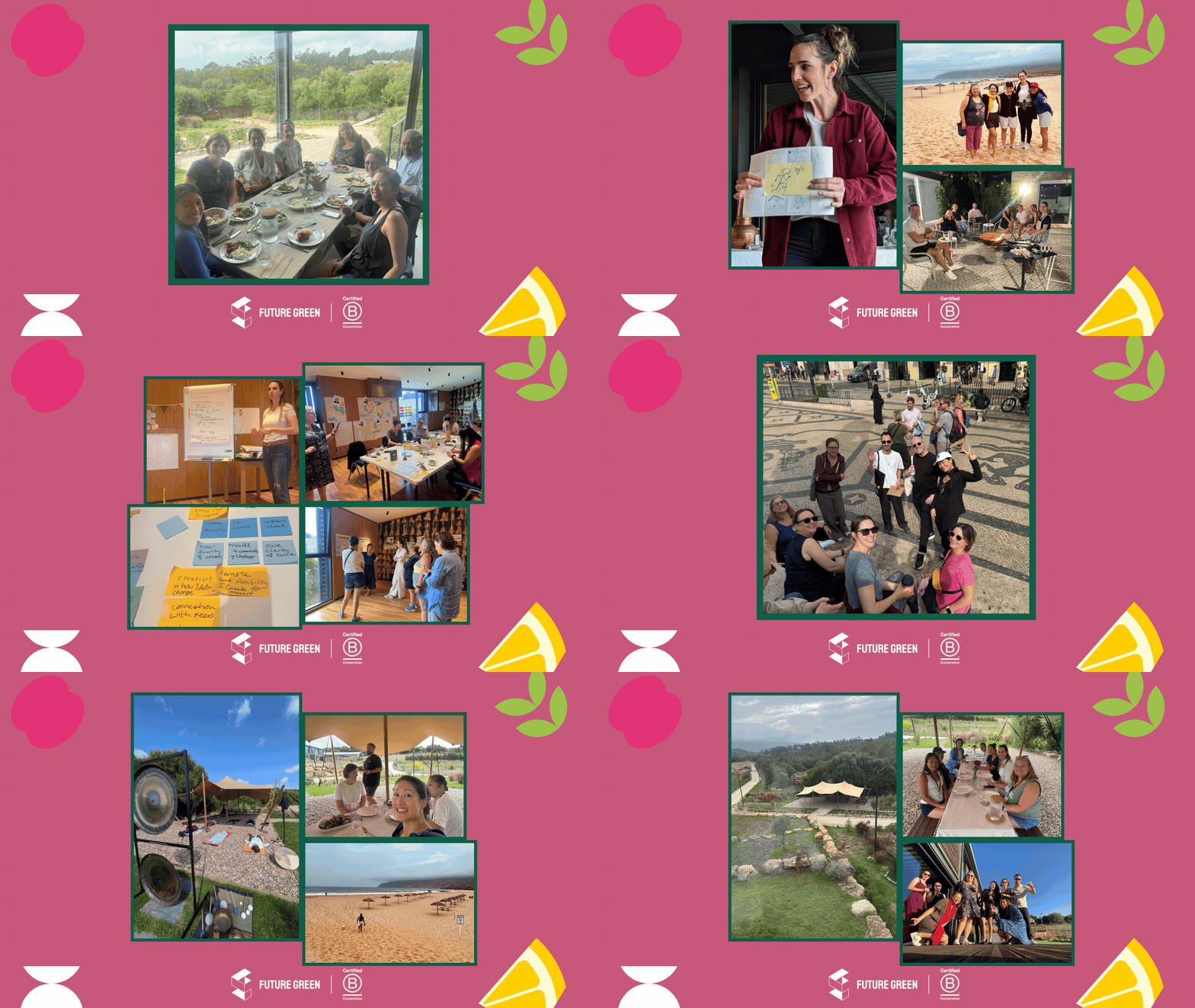
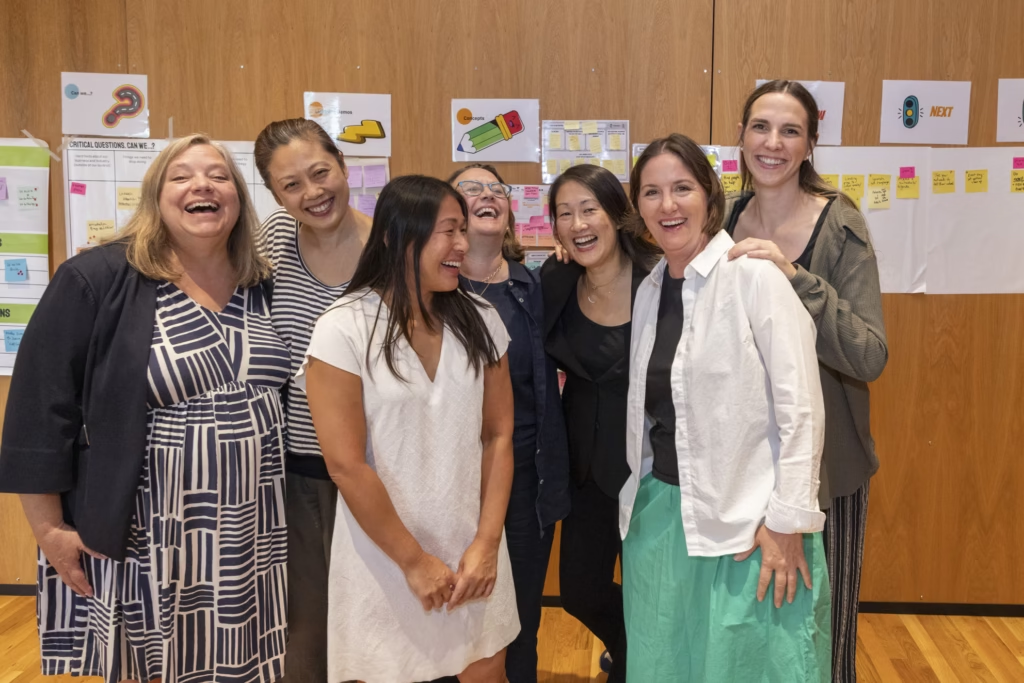
Our amazing practitioners.
FIVE DAYS BUILT AROUND PRACTICE
At the heart of the retreat was a simple idea: less passive learning, more doing.
Throughout the week, we worked through the different stages of a Strategy Sprint with a real case study, exploring how to take a group from purpose and guiding principles through concept creation, decision-making and action planning, and finally towards a clear roadmap.
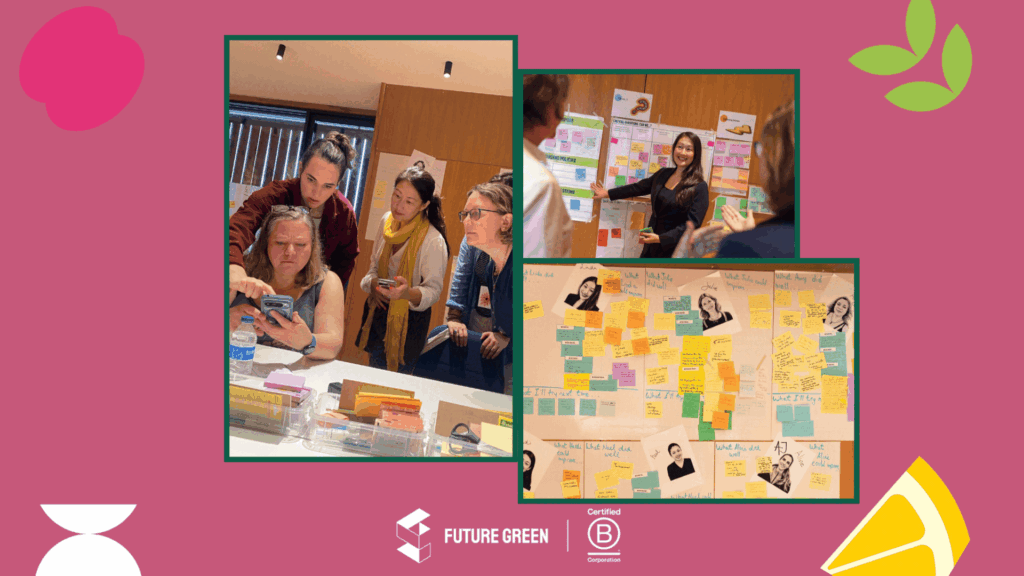
The Strategy Sprint approach draws on methodology I learned through AJ&Smart and have since adapted through years of working with clients.
But I did not want participants simply watching me facilitate.
They had opportunities to practise, experiment, receive feedback and make the methods their own or putting their own ‘flavour’ on it.
That was one of my favourite parts of the week.
One participant, for example, combined LEGO Serious Play principles with a client discovery process. Others explored how different exercises and facilitation techniques could work with their own clients and sectors. We made ‘mash ups’ where 2 or more known tools were creatively combined to deliver deeper work. For example, I did my usual speed networking but added Mood Meter by Dr. Marc Brackett, a professor and founding director of the Yale Center for Emotional Intelligence. That combo worked swimmingly!

Learning by doing. Adding a little LEGO to the Strategy Sprint.
It reminded me that experienced facilitators do not necessarily need more tools for the sake of having more tools.
Sometimes they need the space to practise, experiment and build confidence using them.
LEARNING FROM EACH OTHER
I went into the retreat thinking a lot about what I would teach.
I came away thinking just as much about what everyone else brought.
Alongside our facilitation practice, participants contributed their own knowledge and experience through “level up” business sessions.
We explored creativity, different working styles and business development. We had a playful PowerPoint arty. I shared some of what I have learned through Facebook ads, and other practitioners brought their own expertise into the programme.
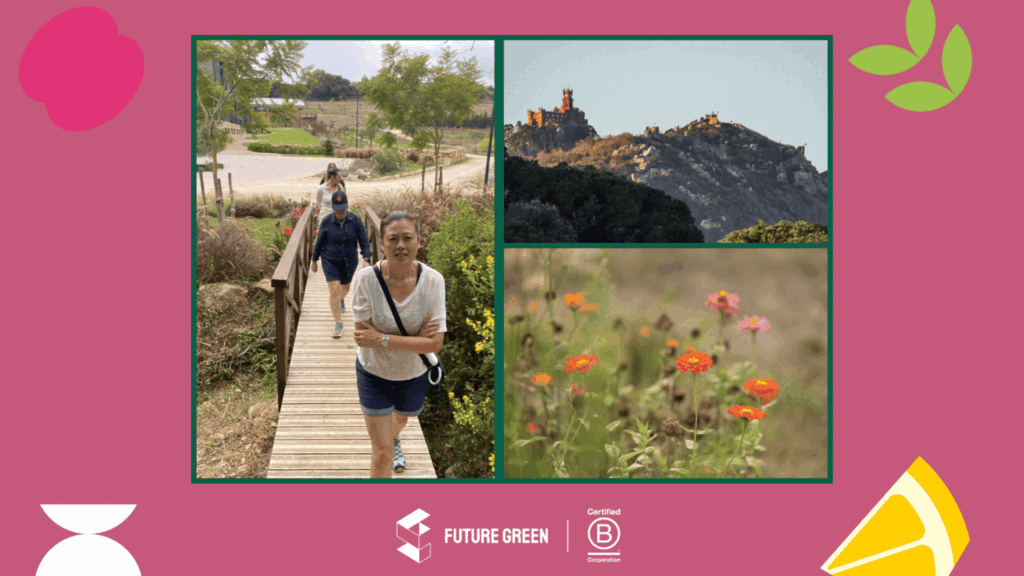
Some of the best conversations happened outside the formal sessions too: over meals, during forest walks and in those little spaces between activities.
One participant playfully described taking away what felt like:
-Thanks to the mix of people in the group.

Aline’s reflections after Day 1: learning, experimenting and sharing ideas with fellow practitioners.
The retreat became a reminder that when you bring experienced people together, the facilitator does not need to hold all the knowledge. The people in the room become part of the learning.

Learning from each other, inside and outside the sessions.
SMALL TURNED OUT TO BE PART OF THE VALUE
Before the retreat, I had one worry that kept coming back: Was the group too small?
I have organised hundreds of events in different forms, so organising the retreat itself was not what worried me most. But most had been for 100 people at lower ticket pricing. So going wide rather than going deep on the topics.
I wondered whether people would think bigger meant better.
Then, on day one, a participant sent me a message saying how excited and grateful they were to be part of what they described as a VIP experience.
That stopped me.
I had been looking at the number of people.
They were looking at the quality of the experience.
The small group meant everyone had time to practise, ask questions, contribute their expertise and really get to know one another.
We could go deeper.
And instead of being a weakness, the intimacy became one of the things participants valued most.
That is something I will protect when we do this again.

Small group. Big conversations.
THE ENVIRONMENT MATTERS TOO
I have always believed that how we design an experience matters just as much as what we put on the agenda.
Our surroundings in Sintra became part of the learning.
Each day connected to themes inspired by our environment, from earth and sea to forest and reflection. We ate local and seasonal food, including produce from the farm, and spent time outside whenever we could. With sustainability being my approach and values it was easy to curate this week that way.
We had beach and forest walks, yoga and opportunities for wellness treatments.
Our wellness practitioners also shared their own journeys and expertise.
Facilitators and trainers spend so much of their working lives holding space for other people. I wanted this retreat to create some space for them, too.
There was room for the unexpected as well.
A trip into Lisbon became a walking tour combined with an exploration of brand identity, led by a fellow member of the AJ&Smart community – Tim Leake and his wonderful peer Dan Phan who led us on a mini city tour that inspired our thinking around brand and visibility – how creative I thought.
Those moments reinforced something I love about facilitation: you can design a strong structure without controlling every outcome.
Sometimes the most memorable learning happens in the spaces you leave open.
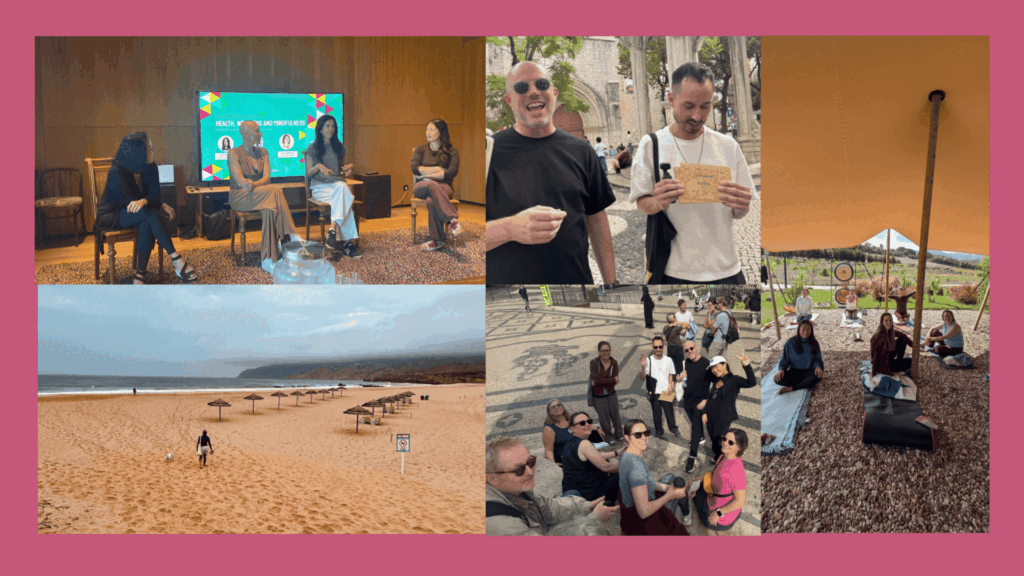
The environment became part of learning. Letting nature shape the experience.
FROM IDEAS TO ACTION
One thing I did not want was for everyone to leave Sintra full of inspiration but unsure what to do next.
As the week progressed, we moved from purpose and ideas into decisions, action steps, and roadmap creation.
Participants were not simply learning individual exercises or ‘recipes’ as we call them. They were seeing how those exercises connect to create a complete strategic process and how they could adapt that process for their own clients (even though they used their own business as the practice sessions topic. E.g. for Lightning Demos – our core research activity, we ran this instead of on a client case, on marketing that we could all benefit from).
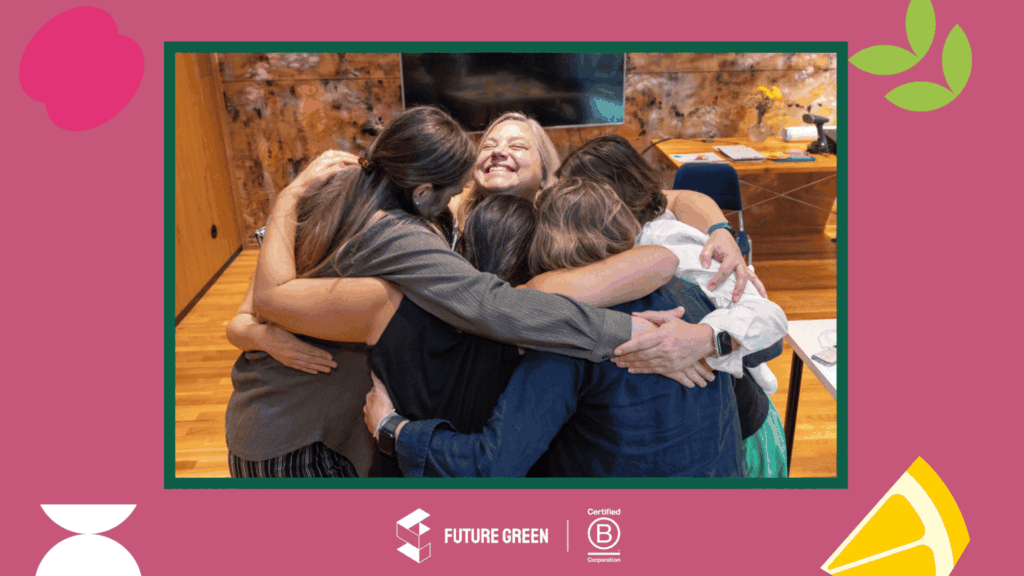
My most memorable parts are the unexpected sessions, like experiencing the Deloitte Business Chemistry activity as a warm-up to understand how to collaborate better in teams, a Serious Lego Play mash-up with a Liberating Structures recipe to help you better pitch a client. And ending with our reflection activity, Circle of Appreciation, before getting our professional photos taken, connecting the craft of facilitation with the practical side of building a business around it.
Because being a brilliant facilitator is one thing.
Being able to explain what you do, package it into a valuable offer, and confidently bring it to clients is another.
That became an increasingly important part of our conversations throughout the week.
WHAT THE RETREAT TAUGHT ME
Perhaps my biggest learning was about my own work.
My professional home is food sustainability. Through Future Green, I help food and hospitality businesses turn sustainability ambitions into practical action.
Strategic workshops have become a big part of how I do that.
But during these five days, I realised something.
Some people want to learn from my experience in food sustainability.
Others want to learn how I design, facilitate, and sell strategic workshops and how they could do the same within their own fields.
That second audience is much broader than I had allowed myself to imagine.
I also realised I had probably undersold what we had created.
I thought I was hosting a facilitation practice retreat.
Our participants helped me see that it was something closer to a business mastermind retreat centred around strategic workshops.
The learning came from the facilitation practice, but also from the peer exchange, business conversations, natural environment, wellbeing experiences and time we had together.
All those pieces mattered.
WHAT I WILL CARRY INTO THE NEXT RETREAT
Hosting these five days brought together so many things I care about: facilitation, entrepreneurship, sustainability, creativity, food, nature and taking care of people.
For the next retreat, practice will remain at the heart of the experience.
I want to keep the group intimate, make peer contribution an even bigger part of the programme and continue bringing in people with complementary expertise.
Most importantly, I want participants to leave with something they can actually use.
Not simply another framework.
But more confidence to walk into a room of decision-makers, facilitate meaningful conversations, turn ideas into action, and build strategic workshops into their own work.
Because after five days together in Sintra, one thing became even clearer to me:
And I cannot wait to do it again.

Five days together and plenty to take home.
💡 WANT TO BRING A STRATEGY SPRINT TO YOUR TEAM?
You do not need to be a facilitator to benefit from the approach we practised in Sintra.
At Future Green, we use Strategy Sprints to help leadership teams tackle complex challenges, align around priorities and turn ideas into a practical roadmap for action.
Whether you are developing a sustainability strategy, launching a new initiative, or aligning stakeholders, a facilitated Strategy Sprint can help your team move from discussion to decisions and action.
→ Find out how a Future Green Strategy Sprint could work for your team – Let’s talk
